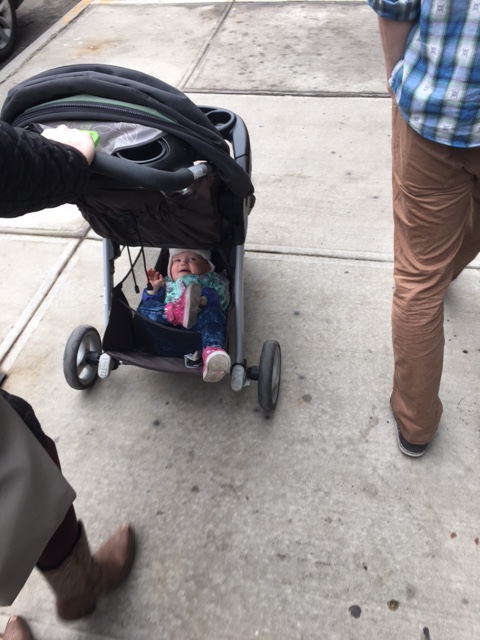
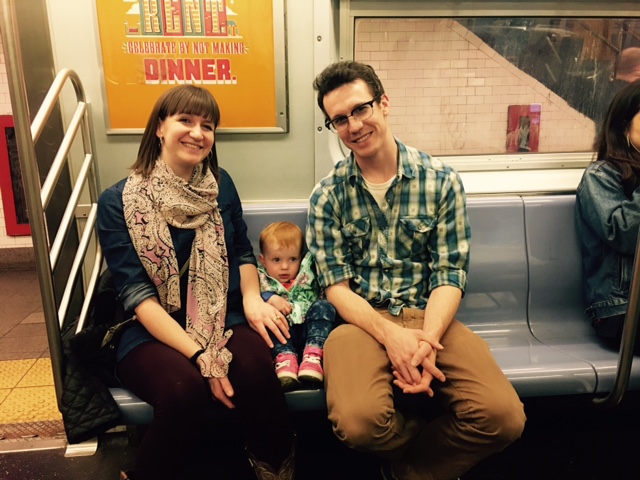
Happy new moon eve everybody! I’m writing this post from Mulholland’s bar in Williamsburg with a Brooklyn Lager in my hand, NCAA tournament basketball on the TV (currently S. Carolina 55—Florida 57), and some very special company by my side. My sister Liza, brother-in-law Joe, baby niece Bridget, and our friend Gaines came to visit NYC this weekend so we’ve had a whirlwind weekend of hardcore hanging out. I know you’re all waiting with bated breath for the four songs I’ve written this moon cycle. You faithful readers of course know that my goal for this moon cycle was to write, arrange, and record four songs. You know that right? Right?

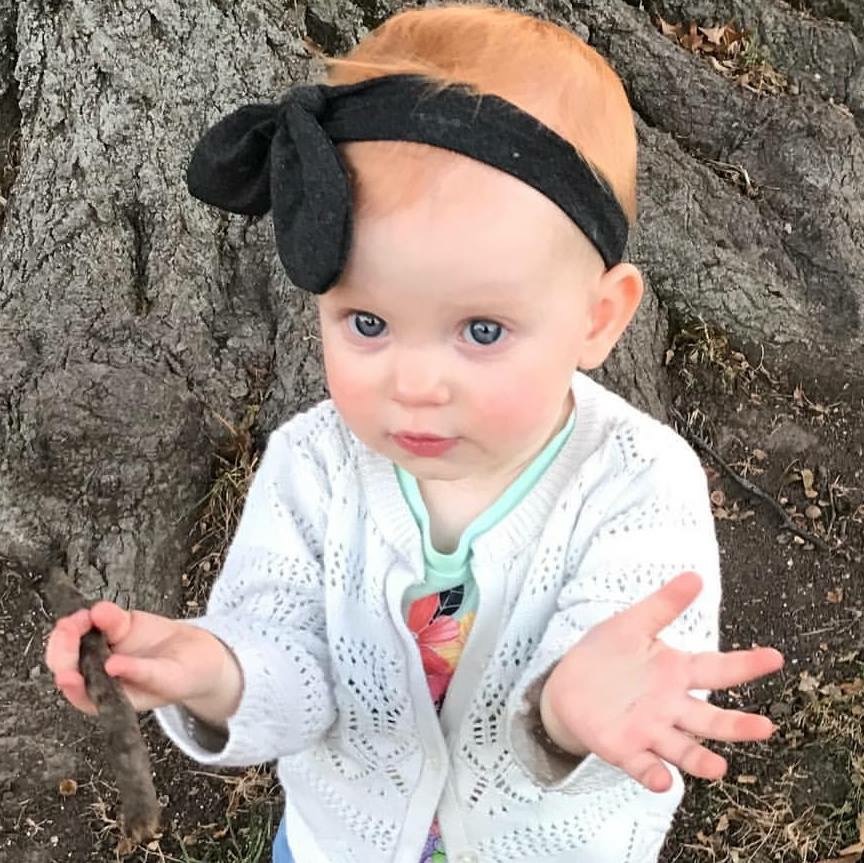
Yeah, you know that. I want to tell you a little more about those songs, but first, look at how cute my niece is.

What were we talking about? Oh yeah, those songs I’ve written— I wrote four songs these past four weeks, and my goal was to share them with you all tomorrow. Yes, my goal was to share them with you tomorrow, but my new goal is to share them with you in a week. Is this a cop out? Yeah, a little bit. But I’m a grown ass man, and can cop out of my goals if I want to. Plus, I have a really good excuse. I could have recorded these songs in time for my Monday deadline if I had spent all weekend recording these songs. Instead I’m hanging out with this goofball!

So anyway, you’ll just have to keep that breath bated while I go enjoy myself. See you next week!

This week, because I enjoy being both efficient and lazy, a large portion of this blog post is going to be the abstract to my master’s thesis. My thesis is due next fall so the final abstract will surely look a bit different than what you are about to see here. This is simply a preliminary abstract that I have to submit tomorrow to the honorable Dr. Dave Schroeder (director of jazz studies at NYU) so he can make sure that i’m not going to do anything terribly misguided or unrelated to jazz in my research. Unfortunately I fear I may be doing something terribly misguided and unrelated to jazz. You be the judge…

“Back in the days when i was a teenager,

before i had status and before i had a pager,

you could find the Abstract listening to hip hop.

My pops used to say, it reminded him of bebop”

-Q-Tip (Excursions)

The purpose of this research is to examine the connection between hip hop and jazz. Certainly there have been a number of jazz artists to utilize hip hop beats in their songs (notably Herbie Hancock, Miles Davis, and Branford Marsalis), as well as a number of hip-hop artists to utilize jazz samples in their songs (notably A Tribe Called Quest, Digable Planets, and De La Soul). Yet the connection between jazz and hip hop is deeper than mere examples of cross-pollination. Herbie Hancock himself has acknowledged the relationship between beboppers composing new melodies over Tin Pan Alley chord changes and hip hop MCs composing new lyrics over funk grooves from the ‘60s and ‘70s, while the journalist Harry Allen proclaimed outright that “hip hop is the new jazz” (Tate, 388).

There are many similarities between jazz and hip hop. Both hip hop and jazz were created and developed by working class African Americans. Each genre served, and often still serves, as dance music (although jazz has in many cases evolved beyond a danceable rhythm, it is interesting to note that Dizzy Gillespie said in his autobiography: “Jazz was invented for people to dance. So when you play jazz and don’t feel like dancing or moving your feet, you’re getting away from the idea of the music”). Jazz and hip hop also share musical priorities such as an “obsession with syncopation and timbral exaggeration” (Tate, 388).

The above are just a few general connections between hip hop and jazz. Yet during the course of this research, I will attempt to discern the exact degree to which hip hop is jazz. I will do this by comparing and contrasting each genre’s creation, and social function, and aesthetic trends. Finally, I will do rhythmic transcriptions and formal musical analysis of verses by notable rap artists in an attempt to discover the musical similarities between dexterous rappers and jazz virtuosos.

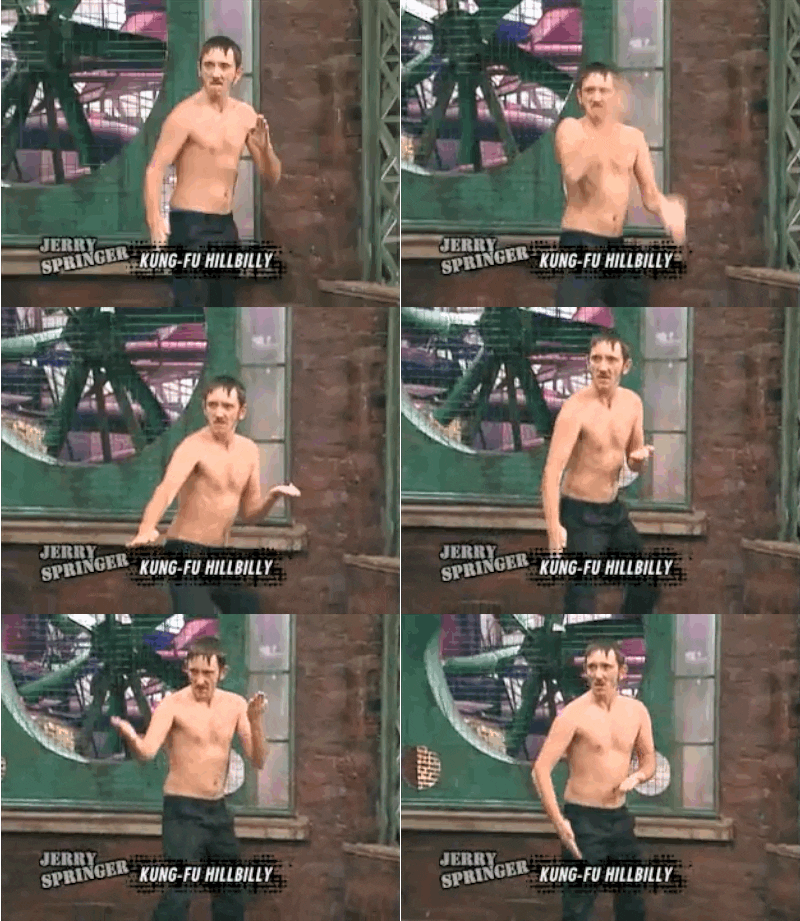
What’s up nerds! It’s me Lucas, back from formal research writing land and back in the cozy casual world of blog writing. Seriously, anything goes here! Watch.

Weird GIF - Find & Share on GIPHY

See!

Ok, anyway let me soften the blow of my previous accusation. I don’t think that my research will be misguided or unrelated to jazz. I see clear social and aesthetic connections between jazz and hip hop. Yet I do realize that there is potentially a big problem with me exploring this topic: I’m white. Yes, I’m white. I don’t know if you all realized this from the fact that I look, sound, and act really white, but it’s true, I am white. And yet a foundation of this research is the fact that both hip hop and jazz were created by poor and working class African-Americans. I obviously have no idea what it is like to be black or tan. I’ve never known anything other than easy living on Caucasian lane.

If I were to at all try to explain the subjective experience of the creators of jazz and hip hop, I would be speaking about something I know nothing about. Sure, I have black friends, yes I play jazz and hip hop— this gives me the authority to talk about the African American experience right? Nope. Not even a little bit. White musicologists have a rich history of overstepping the domain of their knowledge and experience when analyzing African American music. Early 20th century accounts of blues, jazz, and African American folk songs are full of simplistic and racist portrayals of black people. I hope to avoid this trend at all costs.

Luckily, my research is redeemed by the fact that this is formal academic writing (i.e. the most boring, soulless, lame-ass writing in all the land). In this paper, there will be no room for subjective commentary, simply objective description. I’ve chosen to write about the connection between jazz and hip hop not because either is part of my cultural tradition, but simply because I really love to listen to and play both. And if you have to write a long-ass boring research paper, it might as well be about something you love right?

As I wrote a couple of weeks ago, my goal for this moon cycle is to write, record, and release four new songs. And the next logical question is “how the hell do I do that?” If anybody has a good answer to that question, please let me know. I’ll be sitting in my room watching Girls (the HBO show, not the gender) until I figure it out. Ok bye!
Girls On Hbo GIF - Find & Share on GIPHY

But seriously folks, most of the modest number of songs that I’ve written, have been a product of pure inspiration. The music flows out naturally and easily, and the lyrics come fully formed as if written in stone. However, this makes for a very inefficient songwriting process. Although my songs have mostly been snapshots of inspired moments, these moments are are few and far between. Using this process of “inspired songwriting,” it has sometimes taken me years to finish a song. It is a very different approach to say “inspiration be damned, I’m going to write and record four songs this month no matter what!” Unfortunately that is exactly what I’ve set out to do, and thus I’ve got to figure out a way to write these songs!

Lucky for me, I am surrounded by brilliant musical minds at NYU and am paying top dollar to be able to ask them asinine questions like “how do I write a good song?” During a show a few weeks ago at the 55 bar, the great guitarist and NYU professor Wayne Krantz told the audience “all you need in a song are two things and an ending.” Like everyone else in the audience, I was amused that someone who plays such creatively advanced music would propose such a simple equation for composition. Yet unlike everyone else in the audience, I get to pick Wayne’s brain every Friday at 3 o’clock (yes i’m bragging) and can unpack his approach to songwriting.

Few would accuse Wayne Krantz of being a pop musician, and yet he claims that he approaches his songs like a pop musician in that everything is either a verse or a chorus. He comes up with a musical idea that he likes and decides if it is a chorus part or a verse part (“is it the comin’ home part, or the storytelling part?”). After he has built either a verse or chorus part, he then uses contrast to create the other part. For example, if the verse part contains mostly short notes, he may change to long notes for the chorus; or if the chorus part is loud and rocking, he might make the verse sound softer and more relaxing; or if the verse part is using mostly one or two notes at a time, he might switch to full chords for the chorus; or any combination of these and other contrasts.

This all seemed simple enough after he explained it to me, so I decided to use this method to write one of my songs. Indeed, one could certainly use this method to write a song, but after I brought in my song for feedback from Wayne, I discovered that he has some other principles he uses to write a good song. In my song the verse material was funky, syncopated, and used just one or two notes at a time. I contrasted this with a more flowing chorus of full, lush chords. Wayne liked it, but one of the things he pointed out was that during my verse section (the storytelling part), I had this two-note chord thing happening which could be heard has a melody, but more would likely would just come off as a vaguely cool guitar thing. He said that most people really just want to listen to a singer, and if they can’t have a singer, they’d like to have a saxophone player playing the singer’s part— it’s a much smaller percentage of people who just want to hear some vaguely cool guitar thing. Thus, as guitarists, we would be wise to play some kind of melody that at least sounds like it could be sung.

The second bit of advice he gave me was to write an ending. I had simply recycled my intro to the song and used it as my ending. He told me that he thinks “the audience kind of appreciates it when you do the extra work— when you’ve put in a little extra detail.” It doesn’t have to be long or intricate, but it is worth it to put in an extra bit of effort and create a definite ending. He told me that when he was in high school, the guys in Steely Dan were considered some of the supreme arbiters of good taste. Thus, years later when Wayne was hired to play guitar for Steely Dan he asked Donald Fagen “what makes something good?” Fagen paused, thought about it, and replied: “the amount of detail that it has in it.” Wayne advising me to write an ending to my song is also him pointing to the larger goal of simply crafting something with a lot of detail.

I am using the Wayne method and his insightful feedback to help me write these four songs, and I am certainly getting a lot of great ideas by sharing my work with him. Yet the usefulness to me of Wayne’s method is not due to the fact that it is the ultimate right way to write a song, but simply by virtue that it is a way to write a song. It is simply far easier to create something if you have rules, principles, and guidelines for creation. Wayne has been developing these ideas for forty years, and thus I am happy to stand on his shoulders and use them for my purposes— it makes my life easier. And yet, embedded in all of his great advice is a nugget of wisdom he shared that destroys all the others: “The more answers that you accept from others, then the less creative your thing is by definition.” Ultimately yes, I would like to plumb the depths of my own tastes, tendencies, and experiences and come up with my won set of rules and guidelines for creation, yet for now, I’m just trying to write four songs. No reason to reinvent the wheel just yet.