dsc00478

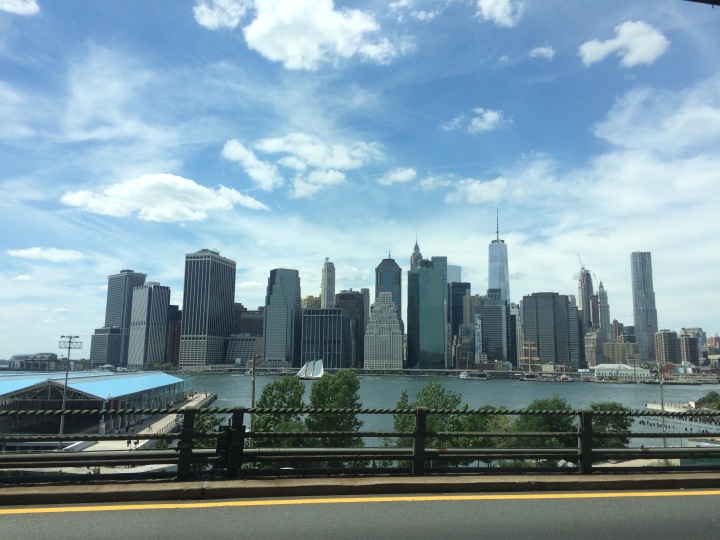
Well, I live in New York now. So far I’ve spent most of my time lazing in Central Park, exploring the NYU campus in Greenwich Village, or piecing together my tiny bedroom in my Upper West Side apartment (pictured above). All summer I’ve been excited about this move and proud of myself for taking this leap, but I confess I didn’t (and still don’t) know what I was getting myself into. I suppose a naive part of me expected that I would arrive and immediately begin walking down a clearly paved road to musical success. In reality, I’ve just been trying to figure out how to properly feed, clothe, shelter, and transport myself in this enormous city. I’ve been here for just over a week, and every day I oscillate between being a giddy tourist and a homesick child. I walk around stupefied by the iconic streets full of hip beautiful people, I constantly screw up on the subway, and I miss my family and friends to the point of tears.

And still, I’m so happy to be here. I know that eventually I am going to figure out the subway, I’ll learn where/when to go to the grocery store, I’ll make great new friends, and I’ll start to feel like my tiny closet of a bedroom is a cozy home. Many of my now effortful actions will change into natural routines. What will not change is the fact that I am living in one of the most exciting cities in the world, surrounded by rich culture and a talented, driven, diverse population. I have every resource I could hope for to help me fulfill my dream of musical success: world renowned instructors, innumerable venues, plenty of talented collaborators, and a potentially vast audience of music fans. I have a sense that if I am not successful here, it will be my own fault. This city is full opportunities for me and I believe that I’m going to be rewarded if I only work hard and consistently choose to step out of my comfort zone. Frankly, my dream is to write, record, and perform music all over the world, and I think I’m in the best possible place to make that dream a reality.

This is where you come in precious reader. I’m going to document my musical life and thoughts once a week in this blog, and I need you and everyone else to read it. Sure I could try to hold myself accountable to my goals on my own, but I’d likely end up frequently binge watching any of the brilliant shows available in this golden age of television instead. I wish I were entirely self-motivated, but the fact is, if I know I have an audience, I’m going to try a lot harder. In exchange for your readership, I’ll offer you delightfully useless observations (e.g. New Yorkers won’t make eye contact with you until they are slowly rolling out of your life forever on a subway car— and then it’s nothing but blazing eye contact), as well as priceless nuggets of wisdom (sometimes). You’ll also have a candid look at my life as I rise from Lucas Murray levels of obscurity to Kanye West levels of international superstardom and egotistical delusion.

Finally, I’m going to cap off each weekly blog post with a playlist. I’ve adopted the city-wide habit of walking around with my headphones in— I put all of my music on shuffle, and am consistently delighted by the synchronicity of the random song I’m listening to and my outside environment. Thus, the songs that I’ll include in each playlist are the songs that were most significant or enjoyable to me that week as I roamed the city. And like New York itself, this playlist is going to be diverse, including both old and new songs from a variety of styles. You can find each playlist at the bottom of my blog posts, or follow me on Spotify and find the weekly playlists there if you’re interested in hearing the songs but don’t want to read the blog (you lazy so and so), or if you you like, I can even burn it on to a CD and mail it to you because I’m cool like that (just shoot me an email).

So if you believe in me like I believe in me, please follow this blog, share it with your friends, family, and rich patrons, and don’t be afraid to contact me with any questions, comments, or words of encouragement. Also, if you don’t believe in me or just plain dislike me, please follow this blog, diss me often in the comments section, and judge me as I shamelessly try to pursue my foolish dream of musical success. Whether friend or foe, WordPress user or not, if you would, please go push that follow button at the top right of this post, drop me your email, and then tune in each week for a new post. Thank you!

And here is this week’s playlist:

Three months ago, I told myself and the public that I would release one blog post and one song every week for nine months. So far I’ve been able to stick to my guns because, as I’ve stated before, this project is not about quality— it is simply about quantity. It is a personal quest to get better at the crafts of blog writing, songwriting, and recording simply by putting in some work. However, I’ve run into a problem this week. I had a song to record, and have been working on it all week, but I had no idea what I would write my blog-post about. I casually assumed that I would eventually think of something to write and would be able to knock it out in time, yet each day passed, and I still had no idea what I would write. Even today, the day that I will post this entry, and even now as I am writing this sentence, I still don’t fully know what I am going to write in this blog post.

Yet I’ve got a start. I took a creative writing class my freshman year of college in which we had to write poetry, and my professor told the class that if you don’t have an idea for a full poem, just use fragments of other poems. I was the only one in class who took his advice and I got an A on the poem. It pays to listen to your teachers kids. Well there are no teachers to grade this, but I am hoping that if I just piece together some of my current thoughts on musical things (the phrase “some of my current thoughts on musical things” is best read with a southern accent), it will make for a passable blog post, and we’ll all feel good about Lucas continuing his outpouring of quantity work. Let’s begin with some confessions.

These are my confessions:

  • I haven’t listened to Beyonce’s Lemonade. Why not?! No reason, I just haven’t gotten around to it yet. I’ve been told it’s “a masterpiece,” that it’s full of juicy references to Beyonce and Jay-Z’s marital turmoil, that it’s the “best album of the last two years,” and that she’s not only going to win the Grammy for best album this year, but the Grammy committee is also going to go back in time and give her Beck’s Grammy from 2015 as Kanye tried to do at the time. But yeah, I just haven’t gotten around to it. Perhaps I’ll celebrate the fourth of July with some Lemonade.
  • I’m fairly certain I started playing guitar to impress girls. Now, granted my memory is hazy on this. I’ve always loved music, and I took piano lessons from age 8 to 10, but right around the time I became aware of girls, I insisted on switching from piano to guitar. Coincidence? I think not. I know that by the time I was in high school, I definitely thought it would help me “get girls.” It didn’t, but I stubbornly continued to play, and practice until, by the time college rolled around, I just fell in love with learning the instrument. I’m now (mostly) free from my early ulterior motive, but if it weren’t for my naive misconception that girls would automatically fall in love with me because I played guitar, I might not be the guitarist you see today.
  • Guitar is not my favorite instrument to listen to. When I listen to music, I tend to prefer the timbres of the voice, or an organ, or a horn section, or a nice flute, or even the humble oboe. I play guitar simply because it is the instrument that feels the most natural and comfortable to me. If I am going to contribute to the creation of beautiful music, it’s going to be with a guitar. I do love the guitar, I just like the sound of some other instruments a bit more.

Brief announcements:

  • I have a couple of Rev Room shows coming up soon. The first is with Jamaal Lee on July 3rd for the Drummers in the House event. I don’t know why, but I’m pretty sure Little Rock has the highest dope drummers per capita of anywhere in the world. This Sunday is a showcase of some of these guys including Paul Campbell, Jonathan Burks, Stephen Bailey, and Jamaal Lee, with whom I am playing a short set. I don’t want to give anything away, but we are going to play a song that is going to make you say out loud “what the duck just happened?!” Except remove that auto correct from the word duck. The second show is July 9th, with Big Piph and Tomorrow Maybe for The Legacy Project release show. It’s going to Blow. Your. Mind.
  • I’m going to go in the studio and record an album at the end of July with some of the best songs I’ve written during these past few months. There, I said it. Now I have to do it.

The last album I listened to in full was:

Mr. wonderful by Action Bronson. I got this recommendation yesterday from a special someone— thank you, you know who you are! This album is so incredibly enjoyable. The samples are amazing, the production is great, and Action Bronson’s voice is perfect for his humorous, feel good, braggadocious lyrics. Any album that open’s up with a Billy Joel sample and ends with someone riding “the harley into the sunset” is alright with me.

Something Deep:

Throughout the inevitable ups and downs of a long life, it helps an individual to be at peace and content if he or she is connected to an eternal principle. I am comforted that I get to play, teach, learn and listen to music, because Music is eternal. I’m not talking about any one piece of music, I’m talking about the big, abstract, capital “M” Music that holds all of the various musical works and activities throughout the universe in its embrace. Music is forever waiting and willing for us to touch it’s surface, and is always open to letting us pry it’s depths.

Next time you listen to something, don’t think “I’m listening to Taylor Swift.” Just turn something on, and think “I’m listening to Music,” and then stop thinking, and just let it hit you. As much as we like to glorify our favorite artists, they are not the point— the point is Music itself. No one invented Music, we’re all just channeling it.

Something Shallow:

It helps to be hot.

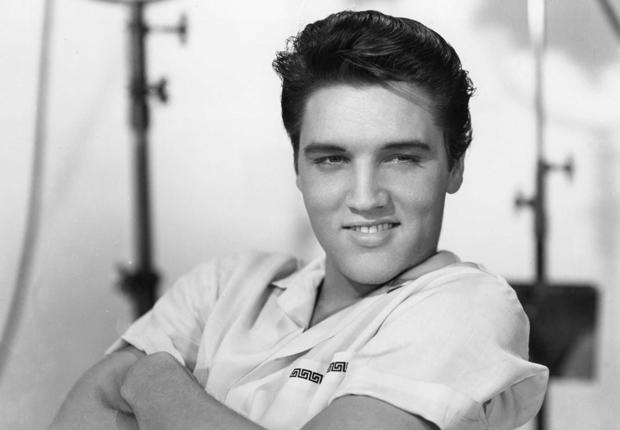
BeyonceyoungelvisNow listen to my new song. Peace!

IMG_0116

Start spreading the news

I’m leaving today

I want to be a part of it

New York, New York

Ok, so technically I am not leaving today, but it is true, I’m going to go make “a brand new start of it” in New York City this fall. This past fall I applied to a number of music master’s degree programs in New York City. My hope was that I would get in somewhere (anywhere), increase my musical knowledge and skill with the help of my teachers, meet fellow musicians at the school in order to start or join a band (or multiple bands), and proceed to “make it” in New York. Because “if you can make it there, you’ll make it anywhere” (that’s my last Sinatra reference I swear). Well, in March I was informed that I had been accepted to NYU to do a master’s in jazz studies with a focus on guitar performance. And an instant after hearing this news, a very tangible feeling of fear appeared in my gut. New York is so far away! I can’t leave my friends and family! I’m so comfortable here! School is so expensive! Is that really what I want to do? What if I’m not good enough? I should stay here… Yet in spite of these voices of fear, and in fact because of these voices of fear, I have decided that NYU is exactly where I need to be this fall.

I am making a conscious decision to go against what my fear is telling me to do because in my heart and mind I know that going to NYC is right. I am simply experiencing something like long-term stage fright: before I play a show I always get a little nervous (and sometimes I get very nervous), but that doesn’t mean I don’t want and need to play the show; I am extremely nervous about moving to NYC, but that doesn’t mean I don’t want and need to move. In fact whenever I take a moment to check into my body, and I say to myself “I am moving to New York,” my heart smiles. Yet it is a strange phenomenon to know that something is right, and to still be clearly afraid of it. I likely won’t be free from these fears until I actually start school (even then who knows), but in the meantime, I am going to engage in the futile activity of trying to dispel these fears by explaining to myself and you readers exactly why I am moving.

I have reached a peek in my music career. When I finished my bachelor’s degree at UALR my singular goal was to not get a “real job,” and instead to support myself solely with musical activities. My logic was simply that if I used only music as my livelihood, I would be spending a lot of time working on music, and thus would become better at music, and thus would be equipped to have more opportunities to earn money with it, and thus would be spending even more time on music (and so on and so on in a wonderful positive feedback loop). At first I had to hustle hard to find enough guitar students and gigs to pay the bills, then slowly but surely I had enough musical work to feel comfortable. As we were doing my taxes for this past year, my accountant even told me that I “did well this year” (granted I did well by a young, single musician’s standards— the bar is low). I have succeeded at my initial goal and have spent over two years in Little Rock as a full-time professional musician. Unfortunately I have also grown somewhat complacent as a result of this. There is currently no pressing need for me to get a lot better at guitar, or make a lot more money, or challenge myself creatively. If I were to stay here in Little Rock, I like to think that I would do these things out of sheer will and self-motivation, but I wouldn’t necessarily have to. If I am going to succeed in New York City, among the enormous amount of creativity and talent there, I will have no choice but to maximize my potential. I’m aiming for a new peek.

I am going to New York to test myself, and to learn. Sometimes it is not clear to me here in Little Rock how good of musician I am. Honestly I could name ten guitarists in town who I think are better than me, and yet I have had a few people tell me that I am the best guitarist in town (they need to get out more). I play a large amount of gigs, yet many of these gigs connections are made through friends and family. There is not a clear external test of how good of a musician I am. In New York, I’ll be one of hundreds of good guitarists, with little to no connections prior to arriving there, and I am going to have to work my ass off to practice, plan, and put myself out there. Perhaps this sounds like a fools errand— it is actually a personal test to see what kind of musical and personal strength I can muster in my pursuit of New York City success. Regardless of what the success test shows, I know that I have much to learn, and at NYU I am going to receive an incredible musical education and be in the presence of world-class guitar teachers such as John Scofield, Peter Bernstein, and Wayne Krantz. I am going to grow.

Finally I am going to New York because the time is right. I have always thought about moving somewhere else, but part of the reason I have stayed here this long is because I have an incredible family whom I have loved to live close to. However, this past summer, after decades of living in Little Rock, my parents moved to Newport, AR and my sister, brother-in-law, and baby niece moved to Kansas City, MO (each move was for work)— my stable family tree has been uprooted. Thus the people who are closest to me, my blood, do not need me here right now. Add to that the fact that the location of my brunch gig shut down last month, and it is time for this little bird (ok, grown bird) to leave the nest and go take flight. Peace!

For those not yet privy to it, this blog is part of a nine-month long project in which I release a blog-post and a new song every week. So below is this week’s Opus if you care to listen, and even further below are links to posts from past weeks. Enjoy!

Week 1—Nine Months of New Music

Week 2—That’s Masturbation

Week 3—Oblique Strategies

Week 4—A Conversation with the Wolfman

Week 5—Turn Off the Music

Week 6—Thoughts on Prince

Week 7—Grieving for the Afterthought (pt.1)

Week 8—Grieving for the Afterthought (pt. 2)

Week 9— Paul Simon, Still Alive After All These Years

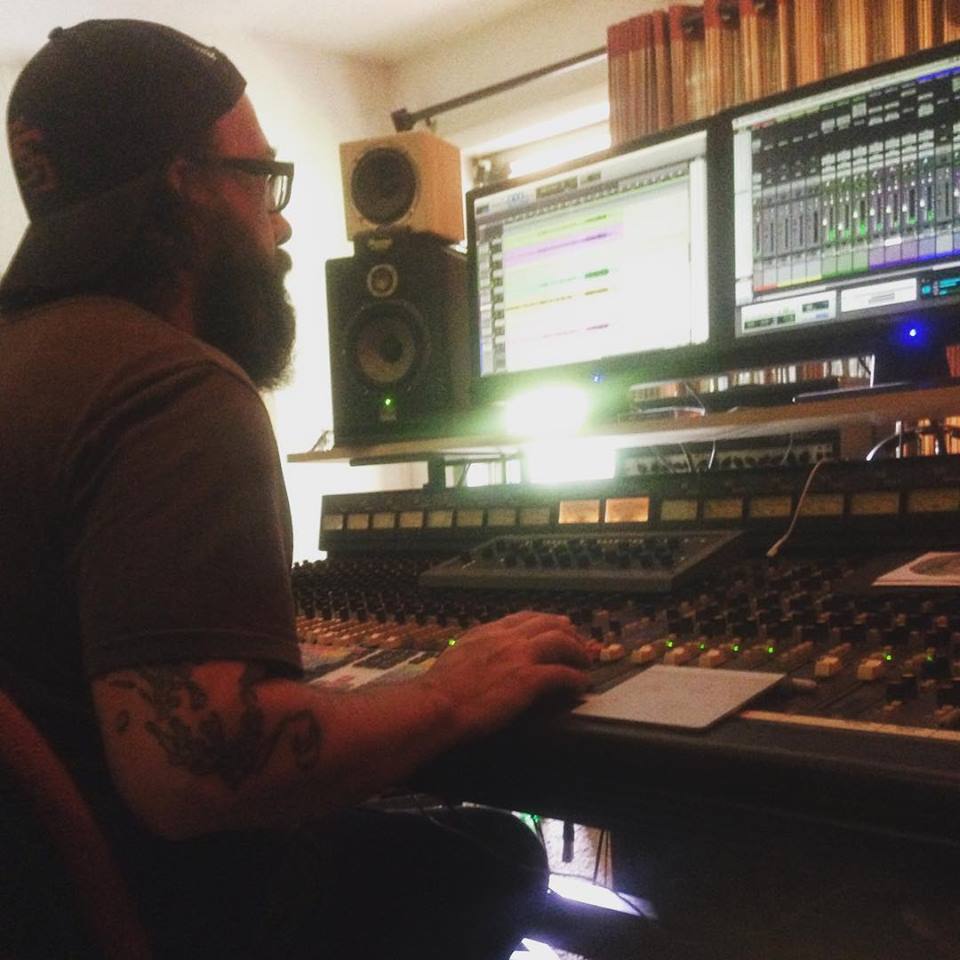
JasoninStudio

I admit that today’s blog-post is a bit longer than normal (that’s only because it’s a lot more interesting than normal). So if you’re simply looking to hear this week’s song, you can click this link right here. But you have to promise me that you’ll go back and read the post. Promise? Ok, go ahead you can click it.

Today marks the fourth week of my nine month long endeavor to release a song recording and a blog-post every week. As I explained in the first weekly blog-post, my primary goal for this project is to produce a large quantity of work, yet my underlying hope is that I will happen to create some good quality work along the way as well. Yet quality songs are hard to come by. Assuming that I have written a good song (which is certainly not a safe assumption), there is still the problem of making the recording of the song sound good. I use a recording software called Logic 9, and with it I have more ease of control, more effects, and more tracks at my disposal than George Martin and The Beatles could ever dream of, but I have an extremely limited understanding of how to use all this power. My knowledge of the recording process comes solely from me tinkering around with various recording devices and software and watching a few youtube videos. When I am recording, I typically have a vague sense that I am doing something wrong, and sometimes when I make something that sounds good, it feels a lot like luck.

So instead of subjecting you readers/listeners to weeks and weeks of poor quality recordings, I decided to try to learn a thing or two this week from my ole buddy Jason Tedford. Jason is the sole owner and operator of Wolfman Studios where he records musicians and bands in all genres and all walks of musical life. He also plays guitar for the riotous rock band Iron Tongue and is a co-owner of the brand new music shop Dogtown Sound in North Little Rock. I got to know Jason during our stint together in the band The See, and he has always impressed me as someone who is extremely kind, humble, genuine, talented, and incredibly knowledgeable about music, recording, and Star Wars. So for the small price of one Gyro Platter, Jason agreed to meet up with me Monday at Leo’s and let me pick his powerful brain. Below is an abridged transcription of our conversation— if you want to delve deeper into more technical side of our conversation, feel free to send me a message and I’d be happy to share. Enjoy!

L: Jason, this is just so the people can get to know you a little bit. You are probably the biggest Star Wars fan I know, but who are you in Star Wars?

J: Han Solo. Who else would I want to be? Han Solo.

L: I mean that’s a pretty bold claim, we’re talking about the whole star wars universe— most of us probably aren’t Luke, or Han, or Leia, or even Jar Jar— we’re probably just some dude sitting at the cantina.

J: Ok I can say I want to be Han Solo. That for sure. Whether I am him or not… I mean I don’t know, I’m a bit of a scruffy looking nerf herder. So I think I got that. Scoundrel a bit. I think I got that. He’s very anti-establishment. He’s a nonconformist. He sums me up pretty well. He’s definitely who I want to be, and he’s definitely who I’m most like. I mean I do have this (points to his millennium falcon tattoo).

L: Ok, I’ll give it to you. Here’s another Star Wars question, where does The Force Awakens rank against all the Star Wars films?

J: I’d say it’s a tie for third. First is New Hope— I saw it when I was six and it was a huge thing for me, now is Empire a better movie? Probably, but there would be no Empire without a New Hope. So second is Empire Strikes back. Third, is a tie between Jedi and Force Awakens. And then if you’re going to add the prequels in the’ll be ranked in reverse order: It’s gonna be, revenge of the Sith, Attack of the Clones, and if we have to put it in there, Phantom Menace last.

L: Ok now that we’ve gotten that out of the way, we can start talking music. So you both play in bands, and record them. Which do you identify yourself as more, musician or recording engineer?

J: Oh I think I definitely identify as a recording engineer/audio nerd, more than anything else. There have been times when I’ve gone years without being in a band, that I’ve always had the studio going on.

L: Did you start playing first? Or did you start recording first?

J:I started playing first… Well… that might not be totally true. Because when I was a little kid, I would spend hours at my grandmother’s house playing on this cassette deck doing all sorts of radio shows— all sorts of crazy stuff. And ya know, going through high school, I mean even when I was playing guitar, I had cassette decks chained together trying to record something. I didn’t really understand the concept of being a recording engineer. I didn’t even realize that was a job until I was in my first band and recording for the first time.

L: And what band was that?

J: Well it I guess it wasn’t my first band, but it was the first band I was in that actually recorded. It was a band called Pseudo Hippie, and it was all the same people who were in Ashtray Babyhead. It was like an early 90’s grunge band, we sounded like we came right out of Seattle!

L: Cool, cool, cool…

J: Eh, I don’t know if it was that cool. Haha! But we recorded, and it wasn’t real good—it was in a not great studio, but I was like “wow this is fascinating!”— this whole process ya know? And it really kinda grabbed me at that point. But it wasn’t really until the next band that I was in— which was called Marigold and we wen’t to record with Barry Poynter, at his studio which was then still at his parent’s house, and we’re recording with this dude and he has a console on a pool table and he’s tracking drums in the sun room, and we’re like “this sounds amazing” — that’s when it dawned on me “hell, I could do this!” I bought my first four track probably weeks after recording with him and was tracking stuff in my house, and that’s when it all started for me.

L: So jumping forward quite a bit, what are some of your favorite bands that you’ve recorded to date?

J: The Becoming Elephants record was a lot of fun to do— those guys are just incredible musicians. The See record was a personal accomplishment, I was really proud of The See record. The Collin vs. Adam record was really really fun and good. Who else… That’s it. Haha! No. I’m always recording with this guy Drew DeFrance— hard to say I like a particular album because he just does a ton of stuff. He’s really great to record with. They’ve got a full band now, and they’re all really good solid work your ass off players. Who else, Brian Nahlen is always really fun to work with. He’s great, writes great songs, great singer, and he’s got really great ears. Piph is really great to work with— he’s a pro.

L: And do you record using Tape or Digital? And is one better than the other in your mind?

J: I use digital. I used to have tape, but I don’t have it anymore— I mean it’s sitting in a closet, because it’s just too hard to mess with, and it’s not the type of tape that people are looking for. People are looking for 2 inch tape—16 or 24 track whatever— because it sounds better.

L: It sounds better than digital?

J: Well, two inch tape sounds better than the half inch tape that I was running. Two inch tape vs. digital? They both sound good. It’s really more of an opinion. I think that certain things sound better on tape— I think drums and bass guitar. Guitars can sound good on anything. But I think with a lot less work you can make things on tape sound a little bit punchier and a little more real and have some grain to it that is really fun and interesting, whereas you have to literally create that on the digital side.

L: Can you do that? Can you fool somebody with digital into thinking that they’re listening to tape?

J: You can. But the fact that you’ve got 90 percent or more of the population listening to music as MP3’s on their phones or streaming off of Spotify, I don’t know if it even matters anymore! Hahaha! You can listen to something and go “oh, that has a nice warm, punchy kind of feel to it” — that could have been done with tape or it could have been done with digital. I think some people, depending on the medium that they’re listening to—whether it’s vinyl, or CD, or MP3, and depending on the speakers and where they’re listening— maybe they can tell a difference; maybe they can have a preference. I don’t think it matters anymore. The funny thing, is that it’s all going to be digitized at one point or another.

L: When you listen to music, how do you listen to it— what medium do you use?

J: Usually it’s off of CD. Usually it has been ripped onto my iPod, but at full range. I don’t mess with MP3’s— I’ve got friends who are like “I’ve got 50,000 songs on this iPod of mine” and I’m like “yeah, but they’re all MP3’s, and I’d rather have 5,000 songs that sound good, than 50,0000 songs that sound bad.” I mean there aren’t 5,000 songs I’m going to listen to anyway! So that’s what I usually listen to, in my house or in my car. In my house either with my studio monitors, or in my room with my vintage Klipsch Heresy speakers.

L: So here’s a technical question. What are you referring to when you say “full range” as opposed to MP3?

J: Well an MP3 is a compressed audio file. CD’s are generally 44.1 (kHz) sampling rate, 16-bit audio files. When I’m ripping a CD into iTunes I’m ripping it in at that same resolution. It makes your file size 10 times better, but it sounds as good as it does on CD.

—At this point, Jason launched into a long and fascinating technical explanation of the sampling rates he uses during his tracking, and mixing process in the studio. I learned a lot, but I had to stop him to insist that he take a bite of his Gyro—

L: Ok so before we wrap up, I want you to try to ruin one of my songs for the public. I want you to listen to it, and tell me what’s wrong with the recording. This song is called Jesus Burger.

J: It’s kind of Beatlesy! But are you tracking any of this stuff as MP3’s?

L: This is an MP3!

J:Oh yeah I can tell… It’s very 60’s. It’s good. I like it. But I could tell it’s an MP3 right off the bat. I could definitely hear the phaseyness and the weirdness about it. The drums are a little hard to kind of distinguish, at first you can hear them and then as it goes on they kind of get muddied up in the mix. If they were a little more defined, I could probably feel the rhythm a little better. It might be an EQ thing— usually a lot of your muddier frequencies are in the low-mids, and sometimes dipping some of that out can give you a little clarity. The vocals are a little on the thin side— which may be that you are using a dynamic mic. If you got a condenser mic, that might be better. Your voice is a little on the higher side, and you’re singing throughout it, rather than screaming like some guys do. I feel like a condenser would be better for your voice. A condenser will be a lot clearer and more flattering for your voice and might sit in the mix better. We could make a great song out of that.

Thank you Jason for sitting down and talking to me! It was a totally fun and educational experience. I’m going out to Dogtown Sound now to buy a condenser mic to help make my dainty vocals a little thicker and creamier. For now, here’s another Opus recorded without the help of a condenser mic. Enjoy!

This post is part of a nine month project in which I am releasing a new song and blog post every week. If you want to get caught up, here are the links to the previous entries:

Nine Months of New Music— Opus 1

That’s Masturbation—Opus 2

Oblique Strategies—Opus 3

A month ago Whitewater Tavern was packed for the final show of the eight-year old Little Rock band The See. Over the course of the cathartic hour and a half long set, I saw audience members dancing and singing along and at least two bearded band-members kiss former bandmates on the lips. Since 2007, when Joe Yoder (vocals/guitar) and Dylan Yelnich (bass/keyboard) founded the band, The See has played countless shows, recorded two-full length albums, been dubbed the “Kings of the Scene” by the Arkansas Times, and toured the country. Despite numerous cast changes (Louis Watts played guitar and sang briefly before leaving the band, then Eric Michael Morris joined on lead guitar, then Dylan and Eric left the band, and finally Jason Tedford and I stepped in on bass and guitar respectively), The See was able to endure because the signature pieces were always present: Tyler Nance’s heavy drumming and Joe’s infectious singing. The See is finally ending because the voice and vision of the band is going away. Joe is moving to Kansas City, and thus Arkansas is losing one of its best songwriters.

Joe started writing songs in seventh grade when he first learned how to play a power chord on guitar. Enchanted by his new power, Joe brought his mom to his room to hear his first song equipped with verses, chorus, and a bridge. When teenage Joe wasn’t at school or work, he was likely seeing live music at Vino’s or buying CD’s at Rod Bryan’s record store Anthropop (sadly, this is a very dated sentence— Anthropop is closed, Vino’s has declined, and no one buys CD’s anymore). Inspired by local groups like Ho-Hum and Ashtray Babyhead, Joe started his first band Attacking the Audio in 2000 when he was a sophmore in High School. He and his bandmates Mark Chisenhall and Taylor Willet recorded at Blue Chair Studio when it was still just a small shed. Soon after, Joe started another group called the Dischordos with Charles Lyford, Gaines Fricke, and Tim Tellez. In both of these groups Joe was the cornerstone piece, playing guitar, singing, and writing songs. Joe also played bass for a couple of other bands in high school, but recently said to me “any band I have been in, even if it was a jam band that I was playing bass for, I would always write or lead the jam. Song writing is my strong suit, not my ability as a player— it’s how I contribute.”

After moving to Tempe, AZ to attend college at Arizona State, Joe and Mark formed a more mature version of Attacking the Audio with fellow Arkansas transplant Louis Watts. Although Joe’s musical skill and creativity was apparent in college, he was still experimenting with his sound and artfully imitating his favorite groups. A home recording from 2003 called “All for You” showcases not only Joe’s love of Radiohead, but also two trademarks of Joe’s songs that he has carried with him to this day: 1. Long moments without any vocals, highlighting the instrumental side of the song and 2. Drastic section changes, switching from one mood to another within the same song. Listen for yourself.

ALL FOR YOU

Joe graduated from ASU in 2006 with a bachelor’s degree in film and theatre. Despite such a practical degree and likely countless job offers, Joe (like many graduates) didn’t know what he wanted to do with his life. After a bad breakup he left Arizona and went to Nicaragua for a month to build houses with his dad. He then moved in with his parents in Springfield, MO to save up for an epic road trip with his friend and band-mate Louis, all the while continuing to write and record songs. Joe and Louis spent nearly three months traveling all over America before Joe finally moved back to Little Rock in the summer of 2007, wishing to start a new musical project. By the time Joe moved back to Arkansas, though just 23 years old, he had been writing songs for over a decade.

Given Joe’s musical experience, a talented rhythm section in Dylan Yelnich and Tyler Nance, and numerous connections to the Little Rock scene, The See quickly gained popularity after forming in 2007. Joe even wrote some of The See’s most enduring songs when they were still just a three-piece. The song “Selling Gold,” written during this period, may be the band’s most popular song and to me is the prototypical Joe song, incorporating a long intro (almost a separate song), biographical lyrics, passionate singing, and a catchy guitar riff that can stand on it’s own with out lyrical support. Here is the very first version of the song recorded in 2008 at UALR, (though there’s a more polished version on The See’s debut EP Selling Gold if you can find it).

SELLING GOLD

The See hit their stride after lead guitarist Eric-Michael Morris joined the band in 2010 and provided the chord support, solos, and counter melodies the band needed. They played numerous shows in and out of town, performed at festivals like Arkansas Sounds and Riverfest, made it to the finals of The Arkansas Times musicians showcase, and continued to write new material. In 2012, Joe, Dylan, Tyler, and Eric recorded and released The See’s first full-length album, Pretending and Ending, with songs inspired and organized by the progression of birth, to childhood, to adulthood, to old age, to death. Fittingly, the tastiest ear-candy comes early on in the 15 track album. If The See had been in a bigger market with wider distribution and better promotion, I think we might be hearing the song “Hey” on alternative radio stations throughout the nation.

HEY

In early 2013, Dylan and Eric left the band on good terms in order to pursue their careers, but Joe and Tyler, encouraged by their strong new album, still wished to continue The See. Furthermore, they had already booked an April gig in Denver for a friend’s birthday that they didn’t want to back out of. Luckily Jason Tedford and I were eager to fill in and provide the missing pieces— I played good lead guitar and Jason gave the band literally everything else it needed (bass, foot pedal synth bass, amps, pedals, practice space, recording capabilities, and tour van). We played our first gig together at a Pizza restaurant in Denver to a largely lesbian audience who loved our big beards and loud rock (the opening artist performing at the party was a local lesbian singer-songwriter who brought out a large lesbian following). We introduced The (new) See to Little Rock at a Garland Street Art Party later that spring, and by summer I had realized one of my teenage fantasies: tour the country with a rock band. You can read about The See’s sandwich fueled do-it-yourself tour of summer 2013 in my past blog posts here.

Joe is not your stereotypical rockstar. Despite an enormous voice and robust appearance, Joe doesn’t revel in being in the spotlight. Joe makes music because he loves to make music, not because he wishes to be the center of attention. I suspect he enjoys writing and recording songs more than actually performing them—The See has certainly spent more time in the studio than on stage the past two years. The result of this time is an album called Borealius. It is a collection of old and new Joe Yoder originals enhanced and updated by the band and recorded, mixed, and mastered by Jason Tedford at his own Wolfman Studios. Tyler, Jason, and I are all pleased and proud of our contributions to this album, but I still think of this as Joe’s parting gift to us all as he leaves for Kansas City (it is quite literally a gift as you can download it for free here).

BOREALIUS

I suppose I should mention that Joe is my brother-in-law. He and my sister Liza are moving in July so that she can do a medical fellowship at a hospital in Kansas City. Joe’s no slouch either: he’ll be going to the University of Missouri-Kansas City to get a masters in social work. They’re facing a new job, a new school, and a new town, yet the most significant change is the new life that one of them could literally be holding in their arms at this moment. This past Wednesday, Liza gave birth to a beautiful baby girl.

Bridget Murray-Yoder is an adorable creature— as my friend Carmien said, “she looks like a human and not a potato-dinosaur, which is what most newborns look like.” I would love to spend the rest of this blog talking about how she is objectively cute and will surely be the most magnificent person this world has ever seen, but you would probably stop reading. Also, this is a music blog (I am reminding myself), so I think instead I’d like to tell you what this monumental moment means to Joe’s musical life. In sum, “suddenly everything has changed.”

You, reader, are warned that this paragraph is going to get flowery for a moment. When I saw Bridget, I felt my world expand. When I held her, I couldn’t stop gazing at her sleeping face— I wanted to make her feel happy, comfortable, and loved forever, and I’m only an uncle. I know that Joe and Liza are experiencing these feelings to an even higher degree. Yet songwriters rarely touch on selfless love. Most songs are about heartbreak or lust. This is because they are true forces that everyone has felt preoccupied with at some time, and good songwriters often sublimate the pain and passion of their life into their art. And that is exactly how I would brand Joe’s songwriting: he takes the real experiences and emotional content of his life and translates them into something that sounds good. Thus, I can’t wait to hear how the new dimension of fatherly love sounds in his future songs.

I am taking it for granted that there will be new Joe Yoder songs. Although he doesn’t (for now) have a band to play with in Kansas City, I know that Joe couldn’t stop writing songs if he tried. Songwriting has been a primal urge of his since he first started doing it in seventh grade. Joe admitted to me that he dreamed of gaining fame and fortune with Attacking the Audio, the Dischordos, and finally The See, yet I’ve seen firsthand that this is not why Joe writes songs and plays music. When we went on tour, Joe enjoyed himself, but also missed being at home with Liza and didn’t try to indulge in the proverbial “rockstar lifestyle.” Despite discovering a mild distaste for touring-band life, Joe was writing songs for the next See album within a matter of months. Joe doesn’t write songs to get rich or to attract girls (though I’m sure those have been motivators at various times in his life), he writes songs because he is good at it and it allows him to communicate his most honest thoughts and difficult emotions. Talking about why he writes songs, Joe recently said “when you believe you’re good at something, and people tell you you are, really cool things can develop in anything you do. So songwriting became a huge part of who I am and how I cope and relate to others. It feels great to create things that others can appreciate and listen to.”

Joe played his first song for his mother in seventh grade because he wanted to show his new means of expression to the person that he was the most deeply connected to. 18 years, 6 bands, 2 albums, and scores of songs later, and Joe now has a child of his own. I imagine that she will now be the first to hear his new songs. Because, plus ça change, plus c’est la même chose.

MOM

At the dawn of this blog, you’ll remember (well, I remember) that my mission statement was to pursue the art, craft, and critique of music. Throughout my two year span of being a full-time musician, it feels like I have greatly succeeded in my goal of working at the craft of music; I’ve consistently practiced Classical and Jazz guitar, learned an enormous number of songs, played countless gigs, and continually taught private guitar lessons. I feel I’ve failed in the areas of art and critique; I’ve been terribly inconsistent in keeping this blog, and have virtually no original works or recordings to share.

I see clear reasons for this. There is a direct incentive for me to learn songs for gigs, and to teach guitar lessons— this is what people pay me to do (the craft). Conversely, I’ve yet to be commissioned to write my first Symphony (the art), nor have I been approached by any publications to write music reviews (the critique). Practicing the craft of music is essentially the entirety of my job at this point. After I’ve done my job for the day, like many other people I know, I’d rather watch a TV show, drink a beer, or go on a date than try to write a song or an essay. Furthermore, I have a habitual tendency towards learning songs and practicing guitar— these were consistent parts of my former life as a full-time music student from 2009-2013. During this period, I developed no such habits towards recording original music (the art) or expounding my own opinions on music (the critique). Simply put, money talks and habits are hard to break.

My desire to write music is motivated by something more abstract than money or habit. Although I’ve certainly fantasized about getting rich off of my own original music, there is actually no guarantee that I will make any money writing and recording original music. Yet even faced with this possibility, I know that I still want to make music.

My best evidence for this is the fact that my most prolific recording period occurred when I was in high school— a magical time when I wasn’t worried at all about money (my parents had me covered). Weekends and nights I would spend hours on end recording and re-recording parts on my red Fostex 8-track digital recorder for whatever song of mine I was wrapped up in at the moment. I didn’t do this because I thought it was going to make me rich and famous (I barely let anyone hear my songs). I did it because it allowed me to explore and release thoughts and feelings that were deeply personal to me; my songs were typically concerned with girls I liked, frustrations with high school social life, and my semi-secret spiritual yearnings. I remember writing during this period that I was so thankful to have music as an outlet for these difficult and sometimes dark feelings and wishing that everyone could have something similar— I wondered how anyone could be sane without an art to pursue. In addition to the psychological benefits I reaped from it, recording songs also satisfied my basic need to tinker. My recording process was essentially an extension of my childhood fascination with Legos: I would record the foundation of a song (most often guitar and vocals), then add another piece— perhaps a bass-line, then another— a drum track, then another— maybe a guitar solo, then another— a vinyl sample, all the while listening to the work over and over until I was satisfied with the pieces in place. I’d be so wrapped up in these sound-experiments that I would sometimes forget to eat all day.

To be honest, most of the songs I created in high school are not very good (I have the recordings to prove it), yet over the years I’ve also produced enough music that I actually thought was good (and enough is a relatively small amount in this case) to be encouraged to continue writing and recording. Most importantly I still have the burning desire to create and tinker with music that is emotionally, intellectually, spiritually, and bodily meaningful to me. If it were not my job to play and teach music, I would still wish to write and record songs. I can sometimes get complacent, thinking that because I am getting paid for musical activities that I am following my adolescent dream of being a musician. Yet the truth is that my deepest aspiration all along has been to write, record, and perform my original music. I am lucky that both my college major and my current job have made me more capable of creating higher quality music, but I won’t at all be satisfied with this fact unless I actually make the music! I don’t need to make money doing it (even though yes I would like to); I simply need to do it.

And last week I did it; I completed a song for the first time in over four months. Furthermore, I’m going to share it with the internet world— something I truly haven’t done since I had a myspace page in high school. I’m not putting this work in the public space because I think it is particularly special (it’s not bad, but it’s not great); I’m putting it out there to hold myself accountable to my goal of writing, recording, and sharing my music. I don’t necessarily subscribe to the school of thought that would have aspiring artists only share their best work. My strategy is to share music as it comes and as I create it, despite it being less than perfect. With the knowledge that my music is available to the public,I hope to be pushed by a constant sense of “I can do better than that last song” to continue to write and refine my work. Furthermore, as an artist you never fully know what your audience will respond to— a track of mine that I think isn’t particularly good may end up being meaningful to someone else listening to it (or vice-versa). I certainly have my tastes and opinions about music, but I can’t pretend to be the ultimate judge of what is good (even regarding my own work); musical taste is about as subjective and personal as it gets. So right now I think I just want to try to throw a bunch of darts at the board and see what sticks.

So perhaps you’ve picked up on the fact that I am killing two birds with one stone with this blog post. My two failed musical missions (the art and critique of music) are now being resumed. I’ve shared a song (the art), and I’ve written about it (the critique). I should note that I am using critique in a very loose way for my purposes. I am not talking about a formal academic critique or music reviews. I reserve the right to do those things if I wish, but when I say the word critique in the context of this blog, I am really talking about simply writing about anything pertaining to music, and most often pertaining to my own musical life. I wish to use writing as a tool to explore and expand my musical life; perpetual writing prompts for myself are “what am I doing with music?” and “why am I doing it?”. Similar to my logic for sharing my recorded songs, I believe that sharing my musical life via writing will hold me publicly accountable to doing meaningful musical work.

I’ve recently picked up a small collection of Henry David Thoreau’s writings entitled “On Nature and Man.” In the section on aspiration, I read the following:

“Do a little more of that work which you have sometime confessed to be good, which you feel that society and your justest judge rightly demands of you. Do what you reprove yourself for not doing. Know that you are neither satisfied nor dissatisfied with yourself without reason. Let me say to you and to myself in one breath, cultivate the tree which you have found to bear fruit in your soil.”

Writing words and music are truly what I reprove myself for not doing. When I am doing it, I am happier, and my whole world feels more complete; when I am not doing it, I feel I am missing something, and almost everything else feels either subtly or overtly like a distraction. Given my long history of not doing these things, I am honestly a bit skeptical that I will indeed continue to write music and keep a blog. Yet I know that I desire it more than anything right now and I know that I have the ability to do it. I pray that acknowledging these facts will push me towards doing what I know that I need to do— and if you see me in the street, feel free to give me a little push in that direction as well.

So everybody, this is my blog and so I can present myself however I want. The temptation is to conveniently omit all my warts and ulterior motives. But I don’t think doing this will ultimately help either myself or my readers as much as if I am being completely honest. Throughout this blog-post I’ve naturally been showing myself to be pretty noble in my pursuit of music, and indeed everything I’ve written above is true— part of me loves music in an utterly pure way. Yet I’d be lying if I said there weren’t vain and superficial reasons that I do what I do. Part of the reason I want to write music is that I think it is a cool thing to do, and I want to be a cool guy. My ego loves the identity of musical artist and I want you to love me for it too. The same is true for writing about music. I certainly care about what I write, but I also think it is cool that I write and love getting complimented by people who have enjoyed my writing. Being a musician, an artist, or a writer all fit perfectly with what I consider to be an attractive image, and perhaps even more dangerously, they seem to fit many other people’s idea of what is cool and attractive. If I am not careful and self-aware, I know that I can begin to love the image more than the substance (we’ve seen it happen before). The first step to recovery is admitting you have a problem. So again, if you see me in the street, and catch an all-too-princely pep in my step, feel free to tear me down a few notches with a swift verbal jab— not out of hate, but out of love for what I really am: just some dude.

Saturday, February 21:

With the end of our journey in sight, Piph, Paul, and I sat at breakfast and marveled at the many wonderful sights, sounds, and learning opportunities that this trip has offered us. For instance, our previous day in the village of Rebola, with it’s small makeshift houses, joyous children, and moving funeral march, had highlighted both what we’ve taken for granted in America (i.e. clean running water, air-conditioning, internet, transportation, education etc.) and what we dislike about America (i.e. isolation and lack of community). We all agreed that this trip had put things in perspective and made us see that there was little to complain about back home. Piph, the most experienced traveler of the group, explained that after similar musical expeditions to other countries, he realized that he did not want to associate with consistently negative people. Later at lunch, Corey echoed this sentiment by expressing that he did not want to simply return to the complacent doldrums that sometimes pervades the Little Rock music scene. We’ve seen people on this trip who are accomplishing so much more, with so much less money and resources than many of us back home. Indeed, talking to each band-member, I’ve realized that we’ve all experienced this trip as a reminder of how much more we believe we can do with our lives and our music. None of us feel that it is time to rest and pat ourselves on the back, but rather it is time to be even more proactive: to write, to record, to practice, to go back to school, to learn a new language, to volunteer, to fight against injustice and to become who we truly want to be.

In the afternoon, we drove to the French Cultural center to rehearse with some local rappers for the evening’s show. Though they had never heard our music before, five different MC’s were easily able to do rap verses over our songs. This and other rehearsals during this trip have served as evidence of how universal Hip-Hop has become. We haven’t had to teach anyone how to rap, perform, or represent Hip-Hop. Hip-Hop has been spreading around the world on its own for years now. From what I’ve seen, the tiny, obscure country of Equatorial Guinea, brimming with talented rappers and dancers, is a perfect example of this trend.

In the evening we enjoyed a delicious meal on the relaxing patio of the French Cultural Center —I had steak with creamy mushroom sauce, fried plantains, and San Miguel beer (a ubiquitous Spanish beer in Equatorial Guinea that I grew to love). After dinner, we shuffled in to the center’s concert hall and watched the main event of the evening: a two-on-two breakdance battle tournament! Dancers taunted each other with acrobatic flips, popping-and-locking, and incredible feats of strength and balance all to the beat of the DJ’s tracks. I tried to work on this tour diary from the balcony, but realized I couldn’t turn my eyes away from the amazing display of coordination, skill, and energy on the stage. Before the tournament’s winning team was announced, we took the stage to perform a short set. We heavily featured the local rappers we had rehearsed with earlier and the crowd (already worked up from the amazing dancing) was loud and supportive.

After the show and a brief rest at the hotel, we went out with Micheal and Piedad to partake of the local nightlife (wich Piedad explained is most enjoyed by people in Malabo between the hours of 1 and 7am). We went to a brightly lit bar, eccentrically decorated with roman pillars, paintings of Buddha/beautiful west African women, and all topped off with a green laser-light dancing on the ceiling. There we sampled local palm-wine, danced with Piedad, her sister, and their friends, and stayed out until our 3am curfew (imposed by our Embassy driver).

Sunday, February 22:

Today we luckily had plenty of time to sleep off the previous night’s party. Our first event was to meet with an Equatorial Guinean street-workout group called Barbarrio at 3pm (or 15 o’clock as I like to call it). We heard from five members of the group as well as the program’s organizer named Sese (pronounced “sesay”). We sat poolside at the hotel as Sese explained that Barbarrio’s purpose is much greater than providing fitness for young people— it is about acquiring skills like teamwork, communication, English, and discipline which will be useful for the rest of their lives. Furthermore, she explained that they execute their training within a Hip-Hop context— using minimal workout equipment and taking turns to improvise and perform rhythmic workouts to the beat of Hip-Hop songs. When we heard from the five teenage members of Barbarrio (speaking in their best English), the most common sentiments being expressed were that “Barbarrio is like a family,” and that “it is good to work out alone and be in shape, but it is much better when you do it with a group.” I responded by repeating the same ideas about music and our band: “of course it is good to play and practice alone, but it is best when you can make music with others,” and that indeed “over the course of this trip this band has become like a family.” After our discussion, they gave us an impressive demonstration of a typical workout which incorporated difficult pushup and parallel bar routines using our song “Untouchable” as the soundtrack. Next they encouraged us to get in on the workout and showed us different dips and core workouts that we tried out. At one point after a vigorous (and self-centered) workout synced up to my own guitar solo, I decided it was necessary that I jump in the pool with my jean shorts on (much to the chagrin of Michael, who was ready to escort us off to the next event). I went upstairs to change clothes so I missed Piph nearly completing a difficult 180 degree turn on the parallel bar (however, there is video of the attempt if anyone is extra interested).

We all got changed and went to have drinks and hors d’oeuvres with the kind Ambassadorial couple Mark and Jane Asquino, who hosted us at their large, modern home inside the US embassy. There we learned about their travels to central Asia, and talked to them about our musical and personal lives. They showed us pottery, clothes, and art they had collected around the world and we humorously attempted to play some of the African string and percussion instruments they displayed. The food was delicious, the drinks were generously poured, and the conversation was delightful. At one point, Paul exclaimed out of the blue something like “this is incredible, wow.” After we all exchanged warm goodbyes and gratitude, Paul explained outside that he became overwhelmed by the realization that his life could have been very different, but that certain choices (going away from home for college, devoting himself to drums, staying in Arkansas, etc.) had lead him to this wonderful moment we were all having together.

We returned to the hotel room for a poolside jam session at sunset with local Equatorial Guinean musicians. We began with a funky Afro-beat jam lead by local legend Alex Ikot on drumset and a talented young guitarist named Elvis-Bob. Another great hand-percussion player named Gafar played along while Corey and I listened and adapted our playing to the novel but infectious rhythms. Next an incredible young singer named Nelida Karr, who also happened to be married to Elvis, joined us on a West Africa infused rendition of Gershwin’s classic “Summertime.” Alex then summoned up the bass player for his band and we in tomorrow maybe took a refreshing moment to be the audience members for a stellar ensemble of musicians. Everyone played masterfully, joyfully, and tastefully as the band supported one of the best voices I have ever heard in person— Nelida sang with such precise control over her gorgeous full voice that it was difficult to believe that she is only 25! If you don’t believe me (and yes I have been accused of hyperbole from within the band), I have audio evidence of just how amazing this group was. After a few songs, we joined them again for a Hip-Hop jam with Nelida singing an improvised chorus between Piph’s freestyle rap verses. Unfortunately it began to rain so we had to pack up early, but I retired to my room with the rhythms and melodies of the evening still singing in my head.

Monday, February 23:

Our first order of business today was to check out the equipment we would be using for wednesday’s show at the Malabo Spanish Cultural Center. Similar to nearly every stop on our voyage, the equipment at the center was not quite up to the same standard as what we’re used to back home, yet by this time we were veterans of making due with what we’re given. Like many times before, Corey looked at his bass amp, surveyed the rest of the equipment, and uttered a resigned but confident “we’ll make it work.”

After our equipment check, we drove over to a vocational school in Maloba where we sat down for a talk with a large audience of young adults, all wearing lab coats (blue for students, and white for teachers). The enthusiastic crowd encouraged us with loud applause for seemingly every introduction and answer we gave. At one point we asked the audience if anyone knew what Hip-Hop is. Five or six students approached the front to give the answers, most of them replying something similar to “it is a way to express yourself and talk about the experience of being on the street,” yet everyone was especially impressed when one of the students confidently stated the four elements of Hip-Hop which Piph had been describing since day one of this trip: “Rap, DJ, Graffiti, and B-Boy.” We then invited some of the students to the front to showcase their own rap skill, and about six students took turns rapping while Paul made a beat on the table with his hands. Their was an interesting variety in both flow, demeanor, and lyrical content— we learned later from Michael (who understood the Spanish), that one young man was very positive and had thanked us for being here in his rap, whereas another took the opportunity to disparage and attack white people (and I clapped for that guy!). We finished the session with Piph rapping his own verse and a massive group picture with the students. We then got a chance to take a hard-hat tour of the facility where we saw students learning skills like metal-working, electronic engineering, wood carving, and cooking in preparation for good jobs that could support them for the rest of their lives. In a country marked by a huge disparity in wealth between the super elite and the poor, this school seemed to be a very good and potent drop in the bucket.

Next we packed up and departed for the airport in order to fly to the city of Bata on the mainland. We flew with the Equatorial Guinean airline Cieba Air, who conducted their airplane safety demonstration in Spanish and French. I’ve heard it all before so it didn’t matter that I couldn’t understand the words, but I realized that this was the first flight that I’ve ever been on that had no English language demonstration. This was a minor detail, but a major reminder of just how far away from home we were.

We were on the ground in Bata a mere thirty minutes after takeoff, and then checked in to the seaside Hotel Ibis. For dinner we went to the restaurant at the Bata Spanish Cultural Center where we would be performing the following night (Spain is still a major diplomatic influence in E.G. and has some of the finest facilities for cultural programming on both the island and the mainland). There we met with four foreigners who had been living and working in Bata— three of them were Spaniards working at the cultural center, and one was a young American consultant named Elsa who grew up in Mexico, but spent her senior year of high school in Dewitt Arkansas of all places! After expressing the appropriate level of amazement at this coincidence, I enjoyed getting to know her more and talking to her friend Quico, the Spanish Consul in Bata, over a delicious dinner of locally caught fish.

Tuesday, February 24:

Today Piph, Corey, and I conducted our morning workout outside on the wide walkway next to the Atlantic ocean. The oppressive heat and humidity of the tropical country made for perhaps our most intense and difficult workout yet— it took me an hour to stop sweating.

We met up again with Elsa for lunch at a Lebanese restaurant in town, and let her order us a large family style meal of hummus, baba ganoush, beef, chicken, salad, olives, bread, and a San Miguel beer for me. As we were waiting for our food Elsa described the excessively relaxed attitude of Equatorial Guinean waiters— “Once I ordered pizza at a restaurant and they then waited an hour before telling me they didn’t have pizza, and sometimes you’ll order one thing and they’ll just bring you something different.” Sure enough, right on cue the waiter brought me Heineken. Oh well, que sera, sera. The food was plentiful and delicious, and the restaurant owner insisted on treating us to some complimentary papaya and pineapple for dessert (E.G. has the best pineapple), which I washed down with a potent cup of Lebanese coffee.

We then went to a walled in orphanage which contained it’s own school and residence halls— if the children are not adopted at a young age, they are allowed to live and go to school here all the way up to high-school. The large campus was contained by tall stone walls, and on the inside

we saw playgrounds and many buildings which were pointed out to us as classrooms, residence halls, an auditorium, and more— though everything was a bit rundown, Elsa assured us that this was a nice facility for Bata. We met with some administrators of the school there, and although the principal seemed actually a little confused at our presence and definitely disappointed that we were not dancers, he quickly assembled a group of about 80 high-school age students for us to talk to and interact with underneath the shade of a large outdoor covering. We sat down in front of them, with Elsa and Pieadad strategically placed amongst us to do the translating. We introduced ourselves, gave the background of our band and Hip-Hop (expertly translated by Elsa), and then began to ask and field questions. Although shy at first, they told us which American Hip-Hop artists they liked (Eminem, Lil Wayne, Tupac), repeated back the four elements of Hip-Hop, and by the end of the talk some of them had sufficiently loosened up enough to try their hand at freestyle rapping— the crowd favorite was a teenager who didn’t really rap or freestyle, he just repeated the phrase “chopina, chopina, chopina!” to which the crowd shouted back “chopin!” (this was both hilarious and awesome). Next, at the request of the students, Piph rapped a verse to his song “Untouchable” while Paul held his phone speaker up to a megaphone and played the instrumental track out loud. The crowd of students erupted and we were all consumed by swarms of picture takers and and autograph seekers (I apologize to the girls whose shirts we signed— I know that seemed like a good idea at the time). Even Michael, Pieded, and Elsa were asked for pictures and autographs (which they of course obliged).

After numerous unsuccessful attempts to make it back to the car un-photographed, we finally rounded up everyone and drove off to do some brief souvenir shopping. We found a street-side trinket dealer and Elsa helped us all haggle and procure bracelets, carved wooden animals, necklaces, coasters, and bowls. Piph and I also dipped into the grocery store across the street and purchased some Cuban Rum and Italian Wine.

After the shopping spree we drove to the Spanish Cultural Center to check out the equipment and rehearse with local rappers. We’d gotten very good at this routine by now, so it didn’t take us long to conduct the soundcheck and work the two Batan rappers into our act. We booked it back to the hotel in the bullet-proof Ambassadorial SUV that had been our conveyance around Bata, rested, refreshed, and prepared for the nights show. We arrived thirty minutes before showtime and were met with a massive empty room— not a single audience member. We set up and then waited backstage, anticipating a sorry show. Yet, the day was saved when a group of about thirty teenage girls (students from the school we visited earlier), showed up and filled the seats— soon after even more people showed up so that by showtime, we stood before a very decent audience. We had planned on playing a slightly shorter set, but the crowd was so into it that we ended up playing all of our songs. Elsa took the stage in her rock-star attire and helped us conduct the crowd-participation portions of the show, teaching the audience to sing our song “Feel Alright,” telling them to shout “hey!” along to the chorus of “Something to Tell Ya,” and inviting any dancers to the stage for the song “Chills.” The latter made for the highlight of the show: about a dozen young audience members on stage dancing along as we watched and played— Elsa even stayed on stage with us to bust a few moves (“I see you Elsa!”).

Feeling hot and high after the fun show, we were met with a shocking surprise when we found out that someone had tried to break into the Ambassador’s SUV during the show. This was a lousy attempt at criminality on a couple levels: for one, our driver Diosdado was standing right there watching the whole thing unfold; for two, the would-be robber tried to break bullet-proof glass with a crowbar (poor guy barely scratched the surface). We didn’t want to wait for the police to show up, so we went to Quico’s nearby apartment, dropped our equipment off, and walked on to the (possibly) famous “Freedom Tower” for dinner in a revolving Italian restaurant (which we requested they stop revolving because it was making us sick).

Despite being the only customers in the restaurant, the service was textbook Equatorial Guinean (slow and inconsistent) and the long wait time afforded me more opportunity to get to know Elsa. She described the culture shock of arriving in Dewitt, Arkansas for her senior year of high school, where at 18 years old she suddenly lost the privileges of drinking and going clubbing and gained an overly-protective host-mother and a school ripe with racial tension. Despite encountering a slew of real life negative Arkansan stereotypes, she did manage to make friends there and even visited Hot Springs last year to be a bridesmaid in one of her Dewitt best friends weddings— it was at this wedding that Elsa met our one mutual friend/acquaintance: Claire Nichols (shout out to you).

When our food finally came, I was proud to be part of the only group of Americans eating dinner at an Equatorial Guinean revolving Italian restaurant. After dinner we continued our unique journey by being the only people to hang out in the club downstairs— the bartender roped us into staying with some free tequila shots. We busted some brief moves on the empty dance floor, which was surrounded by mirrors on the walls; Elsa explained that this was because in many central African clubs women will dance facing the mirror, watching and waiting for acceptable dance partners to approach them. We all drank another drink and continued to discuss the peculiarities of life in Equatorial Guinea until it was time to depart for some much needed sleep. This will not be news to my bandmates, but I admit to being reluctant to part with Elsa.

Wednesday, February 25:

Today we flew back to the island of Malabo for our final show of the tour. Did I admit to being reluctant to part with Elsa? I have met some very impressive and inspiring people on this journey and she is certainly near the top of them. She is a consultant working on development in Equatorial Guinea, much needed because the country’s massive oil wealth sits in the hands of the elite minority, leaving over 70% of the citizens to live on $2 a day. Despite it being an underdeveloped country lacking in western comforts like running water, electricity, air-conditioning, and internet, whose citizens can be cold and distrusting of foreigners, Elsa chose to go to E.G. because her work is needed there and she believes her work could actually make a positive difference in people’s lives. She lives and works in a harsh reality, yet amazingly maintains an extremely upbeat demeanor— when I asked her how she manages to be so happy in such difficult circumstances, she said one of the most beautiful sentiments I’ve heard during the trip: “I just make my own sunshine.” Time and time again on this trip have I been humbled to meet people either with less wealth or heavier burdens (often both) than I, who nonetheless have truly learned the art of happiness and continue to live and work hard.

After landing back in Malabo, we had nearly a full day to rest and recover before our show. I took the opportunity to sit by the pool and work on this tour diary, punctuating my paragraphs with dives into the water; I stayed there long enough to work up a nice sunburn.

Around 6:00pm we again arrived at the Spanish Cultural Center and conducted a brief set up and sound-check. Corey, Paul, and I then went and had cake and coffee at the restaurant, and enjoyed watching a Barbarrio street-workout unfold before our eyes— this time there were about 25 Babarrio boys and girls (I was happy to see that the group is co-ed) taking turns doing various incarnations of pushups, pull-ups, and dips. Backstage we grouped together and prepared for our final show in Africa. Everyone was loose and ready to put on a great show, continuing a running joke which began at our first show in the Equatorial Guinean heat that we were all going to perform shirtless. Babarrio opened up the show with a ten-minute workout routine set to music; after each person completed a difficult set of maneuvers Nelson, the strong 17 year old leader of Barbarrio, would shout “Uno, Dos, Tres!” and the rest would answer “Barbarrio!” When they completed their whole demonstration he again shouted “Uno, Dos, Tres!” but this time Nelson’s countdown was met with “Big Piph and Tomorrow Maybe!”

We played a loud energetic show to a nearly packed house, relishing playing a show we had perfected over the course of the month. Multiple times I looked around at my bandmates to see them either dancing, smiling, or both. Gone was any self-consciousness attempt to be more or less Hollywood than the other— we were all in this together, and we played one of our best shows of the tour. When it came time for our boisterous closer “Untouchable,” I saw Dre and Piph really considering taking off their sweat drenched shirts. I’ve been of the “give me an inch and I’ll take a mile” mentality for much of this trip, so I went ahead and stripped my shirt off right there in front of the foreign audience (which the Ambassador was sitting in no less), and before I even had time to turn around, Dre had followed suit… then Piph… then Paul. Corey just sunk his head— “are these guys really doing this!?” I read clearly on his face. Halfway through the first verse and Corey had (halfway) followed suit, lifting his shirt above his head, and by the second verse he had reluctantly completed his unveiling. There we were, Big Piph and Tomorrow Maybe, valiant, sweaty, shirtless, American. At the end of the song, encouraged by the rest of the band, I stretched my unaccompanied closing solo well past the limit of tasteful length and dropped in a Star-Spangled Banner quote for good measure. For me, this was absolutely the most fun show of the tour, because after a month of playing, laughing, and working everyday together, it was the most connected we felt as a band.

We made it back to the hotel in time for one more buffet dinner at the “Teatra” restaurant that had become so familiar to us over the course of our Equatorial Guinean stay. We ate and joked around with the hotel staff who had greatly warmed up to us during our week there, and halfway through dinner we were joined by our friend and Barbarrio organizer Sese Site. She passionately pleaded with us to not simply make this a one time trip to E.G.— “what you have done here has been positive, but you need to follow up again and again. The youth here have a lot of pain and frustration below the surface, and they need help finding constructive community activities like workouts and music. You could have a huge impact here.” Piph then explained that while we would like to help, our program (AMA) sent us here as a one time occurrence, and we do not have the money to come back here on our own. Furthermore, we can only help if there are people here in Equatorial Guinea who will be proactive in any potential program and who want us to help. Yet in the end we all agreed that we would try to find a way to continue our exchange with the Equatorial Guinean youth and would absolutely look for grants and programs that would allow us to return.

After dinner, we all went to the hotel bar (Piph, Paul, Dre, Corey, Piedad, and I) to have a final celebratory drink together. Dre and I ordered beers, but we were all a little turned off by the high price of drinks at the bar, so Piph went to retrieve the Cuban rum I had bought the night before and the young bartender kindly let us use glasses from the bar to pour our own booze in. I poured us all healthy portions of rum, and we took turns contributing to a massive band toast: “here’s to the being in Africa!” … “here’s to a great experience, and many more in the future” … “here’s to having the best possible band—there are other great musicians out there, but I don’t even want to look for them”… “ditto!” … “here’s to not really knowing you guys at all before this trip, but now considering you some of my best friends” … “CHEERS!” Piph, Corey, and I went in for a sip, but saw Dre and Paul take the whole cup down, so the three of us followed suit. Despite tossing back a healthy two shots each, we were all pleasantly surprised by the smoothness of the Havana Club rum (something we’ll hopefully all get to enjoy soon in America). We finished the bottle while marveling at the many amazing sights we’d seen, the wonderful people we’d met, and the amazing fact that the five us had spent 25 consecutive days together working and playing and that there had been absolutely no drama or flare ups between us. This was a special journey.


Thursday, February 26:

Today our flight back home didn’t leave until night time, so it made sense to our program organizers to have us do a couple more talks before we left. Logically I understood this, but the fact was that after a great last show and a rum-drenched late night recap of our journey, we were prepared to fly back home and start afresh in Little Rock, carrying the lessons we learned with us. It seemed like the scheduled events resonated with our tour fatigue. The first was a talk at the university in Malabo with an English class, where neither the students nor the teacher (nor us for that matter) seemed to know what we were doing there. We dragged through the conversation, took a picture, and left confused. The second event was another talk with an English class for all ages in the English quarter of town. Here they were better prepared for us and we had a pleasant talk about music and life in America, yet all of us knew that we were ready for the flight home. Finally we ate a delicious dinner of American sized portions of pizza, chicken wings, cordon bleu, burgers, and pasta at a nearby restaurant and went on to the airport. We began our return journey at 9pm Equatorial Guinean time, flew to Paris, then to Detroit, and finally arrived in Little Rock around 5pm Friday evening (central standard time). We were seven hours ahead in E.G. so you can do the math on how long this voyage actually took (I don’t want to think about it).

Afterword:

I think if you re-read this diary (I’m certainly not suggesting you do that), you would find that the most frequently used word was “experience.” I’ve used it as a verb, adjective, and noun countless times, and that word once again is the one that best sums up my time here: I’ve experienced three different countries, eleven different cities/towns, dozens of beautiful sights, and hundreds of impactful people; I come home with a deeper knowledge of the world— I am truly more experienced; and I can honestly say that this was the best experience of my life.

I know that if you asked the other members of the band they would affirm how meaningful this trip was. Yet what is fascinating is that while the magnitude of the trip’s effect on us was similar, the character of the trip’s effect was different for each of us: for one, it reaffirmed and energized his current path; for another, it revealed people and things he needed to let go of in order to progress; for another it showed him how fortunate he was, and made clear that he needed to hold on to someone special; for another it cut through the superficial stressors of American life and showed him that people are what is most important; and for another it showed him the true purpose of musical performance and what the future should look like.

I want to offer my sincerest gratitude to American Voices, the State Department, Marc, Bahri, JJ, Ida, Fatma, Selma, Michael, Piedad, Elsa, Sese, Epiphany, Corey, Dre, Paul, our sound engineers along the way, the many artists we worked with, and all the wonderful Moroccans, Algerians, and Equatorial Guineans that we met along the way for helping make this such an amazing journey.


Sunday, February 15:

During and before this trip we’ve been having an ongoing debate about who in the band is “the most Hollywood.” For clarification, the adjective Hollywood as we are using it is essentially the narcissistic quality of behaving like a superstar-celebrity. However, being Hollywood in no way correlates to how proficient one is at their musical craft— we are only talking about superficial and behavioral indicators (e.g. manner of dress, level of showmanship/show-off-manship, number of pictures posed for, and generally how much one enjoys adulation and attention). It is a generally accepted notion amongst us that our singers Bijoux and Dee Dee (who aren’t here to defend themselves) are the most Hollywood, and that our bass player Corey is the least hollywood. Thus, up for debate is who on this trip (from the pool of myself, Paul, Piph, and Dre) is the most Hollywood, and today, our first show day in Algeria, offered ample evidence for all of us to use in the great Hollywood debate.

Piph and I started the day with a vigorous 7:15am workout in our hotel gym. If asked, I think we would both tell you that we workout to feel good, be healthy, and be more competitive in sports, but come on, I think we each want to look good too (chalk it up to being a bit Hollywood). After the exercise we met up with the rest of the group for breakfast and we were off to rehearsal by 9:15. Our wonderful Algerian program organizers, Ida and Fatma, have done an excellent job scheduling practice/setup times into our days, so we had ample time to tighten up our songs as well as rehearse with the Algerian rappers, dancers, and high-school film students that we would be collaborating with in the evening. We then swung by a shawarma shop for sandwiches and ate them on the way back to our hotel.

After some much needed naps, we packed up the bus and departed for the show venue. On the ride there we discovered that our Algerian driver is apparently infatuated with Akon’s sugar coated dance song “Silver and Gold” — the dude played it literally four times in a row. When we arrived we met and fraternized with more rappers and dancers, bonding in the green room over our love of the free tea and pastries set before us. As the crowd filtered in for the show, a young Algerian DJ played a combination of current dance mixes and late 90’s jams —“Maria Maria,” “Too close (You’re Making it Hard for Me),” and Puff Daddy’s “I’ll be Missing You” comprised one nostalgic three song stretch. The Algerian rap duo “Africa United” and rapper “Mister Pablo” then took the stage, rapping and dancing around to their brand of synth heavy party rap (this is what it sounded like—I didn’t quite pick up on the french and arabic lyrical content). We learned later from Ida that this was the first time any of the night’s rappers and dancers had gotten to perform on this prominent stage— this center was usually reserved for traditional Algerian music. Peaking out from the backstage curtain, I was happy to see not only the biggest crowd of our tour so far (props to Fatma for an excellent promoting job), but also the liveliest— many in the large crowd were standing up dancing and screaming for their hometown heroes, who obliged them with some true Hollywood posturing. It was fun to watch.

After a very flattering minute-long introductory video made by the high-school film students, it was our turn to take the stage. Following our show plan, Dre went out first and played an improvised solo; Corey, who would be next, took his time and waited an extended period before ambling onto the stage (Corey’s not Hollywood). Paul and I eagerly joined shortly after and we all began the official intro which immediately segued into the high energy song “zone out” as Piph joined us onstage. Paul, excited at the sight of a really good crowd, clicked his sticks high above his head before beginning his drumbeat (yes that’s a little Hollywood). After a handful of our original tunes, we again brought on the opening act rappers who joined us in performing a Reggae rendition of our song “Same Game.” During the climax of the song, Paul improvised an amazing multi-measure drum-roll with syncopated accents (Paul was happy to perform for the crowd during this show—i.e. Hollywood). We next covered Tupac’s “California Love” while the dancers performed incredible acrobatic breakdancing. Towards the end of the show, we invited everyone to the front of the stage for the massive selfie. Yet before we could even get into position, Dre, wearing his new flashy dark shades, had taken pictures with five different people (Hollywood Dre!). When we began the final song Dre continued his Hollywood lifestyle by posing for pictures and video during the song— he even left his keyboard station in the middle of the song to dance and take pictures, (granted it was during a part when he didn’t have to play). Piph, likely threatened by Dre’s spotlight, attempted to jump into the audience to rap (that’s definitely Hollywood) but he was immediately pushed back to the stage by our Algerian body guards (yes having Algerian body guards is incredibly Hollywood)— “Alright, I’m gonna get down here with you for this verse, ohp, nevermind” I heard him say into his microphone. I even saw Corey embrace his inner Hollywood by moving to the front of the stage and playing directly to the immediate crowd. During my solo, I tried to indulge in the Hollywood games by cranking up and walking out to the center of the stage and I would have gone to the front, but my instrument cable wasn’t long enough (it’s not a very Hollywood instrument cable). The crowd was in an uproar by the end of the show and I’m sure we all felt justified in our Hollywood behavior.

And thus, the great Hollywood debate will surely rage on. In all sincerity, however, I am extremely grateful that everyone in the band is actually extremely down to earth, authentic, and kind-hearted. We enjoy performing and getting into the act onstage, as well as ribbing each other offstage, but the truth is that no one in the band has a difficult personality. I do believe that there are many performing musicians (both famous and not), who enjoy admiration more than music, but I can honestly say that for all of us, the music comes first.

Monday, February 16:

Today was our travel day from Tlemcen to the capital city of Algiers. Before I talk about that however, I’d like to reveal something about our time in Algeria that I felt I could not write about days earlier. Almost as soon as we got off the plane in Oran we were informed that we would not be able to go anywhere without a Police escort, that we would always have to travel everywhere with the whole group (no wandering off on your own), and that we should assume that our emails/texts/facebook messages/phone calls/skype sessions were being viewed or recorded (therefore we should not use these mediums to write or say anything critical of the government). Traveling around Tlemcen, we were always accompanied by at least two (and sometimes up to five) security guards or police officers— I was even trailed into the bathroom by one of them during one of our rehearsals. I’m still not totally sure if this was for our safety, or because we were viewed suspiciously by the government. To be fair the guards and police were pretty friendly and we were actually able to get to know them somewhat; regardless, I’ve never in my adult life experienced such a feeling of lack of freedom. I am able to write this now because I’ll be publishing this while in Equatorial Guinea.

Back to the story: We traveled from Tlemcen to Algiers via a long five hour train ride. Luckily Fatma took charge of the train station employees and was able to secure us our own section of the train. I sat next to her during the ride and was happy to get to know her better— she had travelled all around the world, but was still in love with her coastal hometown of Algiers; she has two boys ages six and nine; she had recently taken up salsa dancing, and she loves to laugh and joke around. During the train ride she even weighed in on the great Hollywood debate (see previous day), ranking us as Dre, Corey, Piph, me, and Paul (from most Hollywood to least).

After we arrived in Algiers, we drove to a local kebab restaurant in a bullet proof embassy van. We’ve decided that one of our cultural gifts to Algeria and Morocco should be the practice of writing down restaurant orders. At the restaurant our orders were all wrong (except for mine for some reason) because this waiter (like many others not used to our picky American tastes) did not write the order down. After hungrily eating our incorrect sandwiches in the van, we checked into our hotel where we enjoyed best internet connection of the tour and settled in for some much needed sleep.

Tuesday, February 17:

Today four of us (Piph, Paul, Corey, and I) partook in an early morning workout— fitness is apparently a priority for Big Piph & Tomorrow Maybe. After breakfast we drove to an auditorium located in a shopping mall underneath the grand, famous Algiers Martyrs Memorial. There we jammed with the Algerian Blues band King Melody (who played a nice rendition of Eric Clapton’s “You look Wonderful Tonight”), and worked up a nice collaboration with local hip-hop/reggae artist Joe for the following night’s show. We were particularly happy to work with the most talented and accommodating sound crew of our trip so far, who provided us each with our exact volume and equalization specifications.

Yet the real treat of the day came when we were taken to the U.S. Embassy where Ida and Fatma work. To prevent us from stealing government secrets, we had to leave all of our electronics (aside from our instruments which we would use later) at the opening security check. One of us took this as an opportunity to flirt with the cute Algerian security officer who ex-rayed our bags (there is no Tinder community in Algeria so we have to engage the opposite sex in real life). Inside we had a lasagna lunch at the cafeteria and then went to the Embassy’s Information Resource Center (IRC), a library and media center that organizes numerous programs and events in order “to provide authoritative, up-to-date information to the Algerian audience on U.S. policy, and to promote public awareness, and facilitate mutual understanding of political, economic, trade, cultural and environmental issues” (from the Algerian US embassy website). There we had a stimulating and open discussion with Algerian university students and adults who were interested in learning more about American culture (luckily they all spoke English, so we could speak directly to them without the aid of a translator). We talked about why they liked or disliked Hip-Hop, our inspiration and reason for pursuing music, and our goals for the future. Upon they’re request, we finished by performing a stripped down rendition of our song “Feel Alright” with Paul beating on a table, me playing the Embassy’s acoustic guitar, and Piph rapping.

After our group discussion we packed into the radio room and did a podcast interview with the lovely Selma Mouloudj (a senior biology major at the university, English teacher, Embassy employee, and Fulbright scholarship hopeful). Despite Selma’s best efforts at professionalism, the band was having too much fun and we often took the interview to outrageous and off-the-wall places— I know she’ll have to edit out much of the hilarity of this interview but I still greatly look forward to hearing it. We then had a short hour to rest, check email, and chat with Selma before setting up in the Embassy’s atrium to perform at a party for the Ambassador and other state department employees. At the party we played a handful of our songs, met Ambassador Joan A. Polaschik (a very pleasant, fun woman who even helped us out with one of our songs), watched other local artists perform, enjoyed drinks and H’orderves, and even shared the stage with a band of embassy employees for a fun rendition of the classic American song “Wagon-Wheel.” This was a wonderful event that seemed to bring everyone in attendance a lot of joy— the Americans in attendance were grateful to experience a small taste of home, while the Algerians enjoyed getting to see an immediate glimpse of American culture.

After such an eventful day, we were happy to ate a delicious Pizza dinner in the comfort of Francois and Ida’s home. Ida played the bartender, and Francois the DJ as we talked about their college age kids, travel, and the great day we had just enjoyed.

Wednesday, February 18:

Today we had nothing scheduled until the late afternoon. The others rested, worked, and refreshed but I took this as an opportunity to continue the stimulating discussion about life in Algeria with Selma Mouloudj that we began the previous day. After her morning class at the nearby University, she joined me for tea at the hotel lounge. There we discussed two subjects familiar to most twenty somethings (she is 22 and I am 26): 1. Relationships 2. What to do after college life. Though we had similar desires in each area, I quickly discovered that she has obstacles that I have never had to consider. She explained that she plans on getting a master’s degree in Marine Biology and that eventually she would like a job that would allow her to travel. She badly wants to go to grad school in America for the high quality education and because she loves American culture (first learning to speak English by watching American TV shows like Beverly Hills, 90210). However, Algeria has the strange custom of not recognizing foreign degrees, so some of the most hard-working and talented Algerian students who earn degrees abroad, even at the most prestigious American and European schools, find it difficult or impossible to find jobs in their field when they return to Algeria. Even so, Selma is considering applying for one of the 5 or 6 Fulbright scholarships given to Algerian seniors each year which would allow her study in America.

Juggling school, two jobs, and résumé building has left Selma little time for that other great element of young adult life: dating. Yet it seems that even if she did have time for a boyfriend, she would face other difficulties in finding and maintaining a relationship. She told me that most young Algerians date, but that they cannot tell their parents because there is a strong cultural taboo against pre-marital sex and relationships (parental influence seems to extend much further in Algeria than in America—often people will simply live with their parents until they are married). The situation is especially frustrating for women because any female suspected of not being a virgin is considered essentially unfit for marriage. Ironically, she knows young women who have been directly and unromantically asked for sex from men on multiple occasions. She said that she simply wants to find someone nice to date who she can talk to and understands her, yet she’s encountered a world that has shunned public relationships and offered only casual encounters. During this trip I’ve been consistently reminded of the many gifts I’ve taken for granted while living in America, and after my conversation with Selma, I’ll certainly add the freedom to date to this growing list.

Around 4:00 we packed up and headed back to the performance hall to prepare for our show, and it was here that we discovered that Piph had been feeling sick since the morning. While Corey, Paul, Dre, and I conducted sound-check and rehearsed with the rappers who we would be collaborating with in the evening, Piph rested backstage. As showtime approached, Piph was in a feeble state and found it difficult to even speak with the many artists, officials, and fans coming and going before the show. Ida attempted to help feed Piph some healing energy by massaging some acupuncture points and I offered him some medicine my doctor sister had prescribed me in case of travel sickness. Miraculously, Piph was able to muster enough energy and adrenaline to put on a great show with us for the large and energetic Algerian audience. Having seen his pained face and sickly demeanor before the show, I was amazed that Piph was able to power through and perform at such a high level.

Because he was feeling especially weak after the show, we dropped Piph off at the Hotel (our stringent security measures were relaxed in Algiers), and then jetted on to a Hookah Bar/Restaurant to eat and celebrate our final night in Algeria. There our conversation with Ida and Fatma echoed my discussion with Selma earlier in the day. After Corey curiously asked about romantic life and dating customs in Algeria, Ida (the American) first responded that young people do not date and then Fatma (the Algerian) quickly countered with “of course Algerians date!” Ida was simply articulating what she had seen and heard from many Algerians— on the surface it perhaps does appear that there is no romance in Algeria. Fatma however, having grown up in Algeria, was quick to reveal that she had dated her husband before marrying him and that most other Algerians do in fact date. It seems that it is sometimes easy to mistake a country’s public policy for the actual behavior of that country’s people. Yet I’ve been inspired on this trip to see that despite economic, religious, social, and governmental barriers, people will invariably find ways to satisfy their need for art, music, education, and romance.

Thursday, February 19:

We bid a groggy goodbye to Algeria early this morning. Waking at 4:00am, we were in the air and on our way to Paris by 6:30am. Unfortunately Piph’s sickness had not resided and he was feeling especially drained having slept very little and eaten nothing since breakfast the previous day. On the plane we had the most intense health scare of our journey when Piph fainted in the aisle on his way from the restroom back to his seat. He quickly regained consciousness and the nurses gave him a cocktail of medicines to keep him afloat until we could land. For better or worse, I was asleep in another part of the plane for this ordeal, and only learned about it when I met Marc outside of our plane. However, by the time I saw Piph he was already joking about the two petite French stewardesses trying to support his huge limp body. Marc gave Piph a few options: 1. check into a French clinic, 2. fly back to the U.S., or 3. continue on to Equatorial Guinea as planned. Piph instantly chose the latter.

Thus we said goodbye and thank you to Marc, who was returning to the U.S. — he had been extremely helpful in navigating the first two legs of our voyage and promised to continue to be in communication with us if there were any questions, concerns, or needs during the rest of our trip. Before he left, he gave me multiple Paris medical contacts to use just in case Piph’s condition worsened. We located our gate and then I went to find Piph some much needed food and water. Feeling better from the medicine he received on the plane, Piph was able to eat and drink, and we all made it on to the plane feeling encouraged. I passed the time on the plane by sleeping, watching Scarlett Johansson destroy people in the in-flight movie Lucy, and talking to an adorable four year old Cameroonian girl and her mother (the little girl and I basically had the same french language skill and bid each other “au revoir” and “a bientot” multiple times at the end of our flight). Piph was feeling a good deal better, and we landed in Malabo, E.G. without incident.

Stepping off the plane we immediately felt a sensation we hadn’t felt in weeks: heat. We were happy to encounter an orderly scene at customs, which was even expedited for us by someone hired by the U.S. embassy. We then met embassy workers Michael (an American) and Piedad (a local) who would be accompanying us this week (they are the Equatorial Guinean edition of Ida and Fatma). After checking into the hotel, Paul, Dre, Michael, and I drove to the U.S. embassy housing where two fellow Americans named Lauren and Cormac had prepared us a delicious chicken taco dinner in their home (Piph and Corey were feeling tired and sick so they stayed at the hotel). We all got to know each other while watching Sportscenter on American TV, an extremely comforting experience amidst our foreign adventure.

Friday, February 20:

Our morning drive to the U.S. Embassy offered us our first breathtaking glimpse of the giant inactive volcano that stands above the island. We also saw an impressive array of large, extremely modern buildings lining the road from the hotel to the embassy— Oil was discovered in E.G. in the mid 1990’s and there are parts of this tiny country that exude great wealth and extravagance. When we arrived at the Embassy, we overlooked the sound-system and then met with Ambassador Mark Asquino for a fascinating lesson on the History of Equatorial Guinea, which he claimed is “perhaps the most unique country in Africa.” He explained that E.G. was originally colonized by Portugal before being traded to Spain in exchange for land that would become part of Brazil. Spain later leased E.G. to England to run as a haven for freed African slaves. The English helped foster a flourishing agricultural economy in E.G., yet when they attempted to purchase the country, the Spanish (who had done very little in E.G.), oddly refused. Thus, while broken “Pidgin English” is still widely spoken here, Equatorial Guinea is the only African country whose official language is Spanish (there are numerous indigenous languages that are still spoken here as well). E.G. was finally granted independence in 1968. Unfortunately, the country came instantly into the control of a ruthless dictator named Francisco Macías Nguema who ushered in a ten year “reign of terror” which saw mass killings and economic decimation in the country. In 1979 Macías’ nephew Teodoro Obiang Nguema overthrew him and became the new President of E.G., a position he still holds today (he is Africa’s longest serving dictator). Thus, Ambassador Asquino stated that the history of E.G. is in large part a history of trauma, “first the trauma of colonialism, and then the trauma of dictatorship.” Yet he told us that he truly can see hope for this country in the many talented and open-minded young people that the country boasts. Furthermore he framed the importance of our visit by stating that American musicians almost never come to E.G. (the last group to visit was a gospel band that came five years ago) but that young people love Hip-Hop and many may consider our visit “the cultural event of the year.”

After our conversation Piph, Corey, and Dre visited the embassy nurse for some much needed medicine and care and soon we departed for the tiny nearby town of Rebola. On the drive over Piedad told me that Rebola means “lots of kids” in Bubi (the name of tribe/language native to the island portion of E.G.), and when we arrived, I could see why. In front of the Rebola cultural center were over a dozen small, raggedly dressed children (ranging from roughly 2-6) dancing, playing, and wrestling with each other. The town as a whole was, for me, reminiscent only of scenes I’ve seen on television— brightly clad women with buckets of water balanced on their heads walked down a single dirt road which was lined with small houses made of cheap aluminum siding and makeshift parts. Atop the cultural center’s upstairs balcony, we met and rehearsed with some Bubi rappers, but our practice was abruptly interrupted by a funeral procession for an old woman who had died that morning— her casket was slowly driven by in a pickup truck as well over 100 people trailed behind on foot and together sang a beautiful west African Hymn. When all the people had finally passed by we stood speechlessly marveling at the breathtaking moment of community we had just seen.

After rehearsal we went briefly back to the hotel and then returned to Rebola to see the town’s name again affirmed— about 80 small children were there sitting and waiting patiently for the outdoor show to begin. The local rappers soon started the show as the already large audience continued to grow. Though I had virtually no idea what they were talking about, I was very impressed by the rhythm, stage presence, and delivery of many of the Bubi rappers as they energetically performed in front of the two impressive cultural center murals at the back of the stage. When it was our turn, we were pumped up to perform for the fun and energized crowd, yet as soon as soon as we struck our first collective chord we blew out the mixer that was amplifying the keyboard, guitar, and bass. It appeared for a moment that Piph was going to have to perform without the band, but our sound guy soon found and connected us to a backup sound system. During the wait a group of Rebola’s children began performing a choreographed dance routine in order to pass the time. After finally getting reconnected and amplified, we made our second attempt at starting the show. Despite less than desirable equipment, we played a well and had a blast performing with our Bubi collaborators in front of an incredible crowd (the largest of our tour so far). On the way back to the hotel we reflected on the enormous number of children at the show, the technical difficulties, the language barrier, and the distinct scene of the show and we all agreed that it was likely the most unique show we’ve ever performed together.

Sunday, February 8:
“All people who believe in God are Muslim. The problem is that people want to interfere and create differences. People say I am Muslim, I am Shiite, I am Suni, I am Christian, I am protestant, I am orthodox, I am Jewish, etc… but all people who worship God are the same religion. It all comes from the same source. The Koran says that all people who believe in God and worship God are Muslim. There are no differences. People are people.” This is the radical Islam of our Moroccan musical collaborator Barry, which he explained to JJ, Jason (a fellow American traveler), and I at our seaside breakfast table this beautiful sunny morning. Barry spontaneously erupted into this passionate and captivating lecture touching on Moroccan history, the problems of Islam today, conspiracy theories about the world bank, Charlie Hebdo, the ten commandments, the importance of science and technology, and an optimistic vision of a future free of religious, political, and racial divides as JJ expertly translated and Jason and I sat and listened, both intrigued and entertained. Though his words often went to fantastic places, these were not the wild ravings of a madman— Barry was well-read and had discussed and thought about his opinions long before this moment. Though critical of the powers that be and frustrated by the rifts between religious sects, time and time again in this animated discourse he returned to the uplifting idea that people’s ignorant and violent attachment to their particular denominations will fade away in the face of the increasing international connectivity provided by the proliferation of the internet and technology. When I asked him how these ideas related to his music, he smiled and mentioned the title to one of his hit songs that we had performed back in Rabat “the song ‘Ma Zal Yeji Al Kheir,’ it means better days will come.”

Around 1:00 we packed up our instruments and departed for a roundtable discussion with a group of local musicians and artists. Represented were instrumentalists, singers, dancers, a filmmaker, a comedian, and even a magician. I was particularly grateful to hear from an old man who had began singing professionally in Nador in 1967, when there were very few musicians in town, and even fewer places to play. As each shared their story, I could see that everyone was passionate about their particular project or medium and about their region’s art and music in general, but they were disappointed by the lack of support from the government. The conversation quickly shifted to a heated debate about the need for more government money to be given to Moroccan artists and eventually to Moroccan politics in general. Ignorant of the Moroccan political landscape, we in the band were essentially spectators to this spirited discussion. It has become clear however that although it is a Constitutional Monarchy, Morocco is in many ways a socialist country with public money being spent on things such as education, infrastructure, sports, healthcare, art, music, and more. The complaint of the artists in this room was that much more money was being on programs other than art. This was all fascinating, and yet to demonstrate how little we could relate, I chimed in and said that in America, music is almost solely supported by the private sector (one glaring exception being the American Music Abroad program that we are currently on), and that if artists want to perform or create, they always start independent of any government help. Time and time again this trip has shown us that while the same human spirit and intense desire for expression exists everywhere, there are very real differences in the institutional structures and obstacles that artists experience around the world.

After a quick bite to eat, and a brief choppy face-time session with my sister back home, we travelled a short distance to the sight of our show. I’m not sure how the others felt about their equipment— we have different amplifiers, keyboards, sound-systems, and drums at every show depending on what they have provided us— but I was happy to see a nice 60-watt Marshall tube amp waiting for me. Thus musically, I felt most confident and comfortable about this show because I truly enjoyed the tone of my guitar (it makes a huge difference sometimes). We played a similar set to the one in Rabat, and though the audience numbers were a bit smaller than the show two nights before, the ones who were there were very into the performance. We called up the dancers who were at the earlier discussion and they break-danced impressively along to our song “Chills.” Before our closing song we again invited the audience up to the stage for a massive “selfie,” which like in Rabat turned into an opportunity for the audience to stay on stage during the last song. I love this— having people dancing along and interacting with us while we play brings and already energetic song to a great new height.

Monday, February 9:
Corey, Piph, and I again started the day with a vigorous workout, this time on the beautiful Mediterranean beach that faced our hotel (hopefully by the end of the tour my biceps look like Piph’s). After we finished, Piph and Corey waded out knee deep into the sea, yet I felt it more appropriate to sprint and dive in triumphantly. The water was cold and took my breath away, but it was incredibly invigorating and joyous; I mean when will I get to do this again? After breakfast we packed up the bus to go to the town of Nador.

When we arrived we went to a foundation that works to get African immigrants to Morocco legalized and more integrated and accepted in Moroccan society. We sat down and met two Nigerian immigrants, one Cameroonian, and one Ghanian. We learned that they had previously had luck finding jobs and work in the big cities of Casablanca and Rabat, but that the congestion, pollution, and cost of living proved too high so they moved north to the much smaller, quieter town of Nador. The trouble they were now facing was that of both personal and institutional racism against black immigrants— whereas in Casablanca they were accepted and welcome, in the much smaller and more conservative Nador, they were repeatedly denied the papers necessary to live and work there and literally given no choice but to scrounge and forage for food while living in a large makeshift immigrant camp in the nearby forest. My heart broke as I sat and listened to their story and saw the real desperation and acute sense of injustice on their faces. The Moroccan head of the foundation, an extremely warm and kind man name Misham (I’m certainly not spelling that right), assured them that the four of them in the room with us soon would have the necessary papers, and that there was something to hope for. Yet he emphasized that the problem is more systematic and greater political change needed to take place to remedy this sad situation. I felt almost embarrassed at how relatively easy and good my life has been in relation to their plight, and wondered to myself what I could I (merely a guitarist) do to make it better. Yet when the conversation briefly turned to music, one of the Nigerians named Victory said that “music is a powerful media, it can be used to spread messages like ours all around the world— it can inform and change people’s minds.” We invited them to our show that night and bid them a sober thank you and goodbye.

By many measures, this night’s show was the worst of our tour so far. The equipment was broken and bad, the sound quality was poor, and there were few people at the show; yet there was a clear moment that redeemed the show for me. When we launched into our one reggae song, some of the immigrants from the foundation joined us on stage and danced blissfully along, and I saw an expression on their faces that I hadn’t seen earlier in the day: happiness. This is why music is good and important— not for any utilitarian reason, but simply because regardless of what else is happening in the world and in their lives, it makes people happy.

After the show we were given the surprise opportunity to visit Spain for dinner! The town of Nador sits right on the Morocco-Spain border, so we were able to drive to the border, fill out some minimal paperwork and walk right into another country! We found a delightful Spanish restaurant/bar where we drank Spanish wine, beer, and champagne, and enjoyed countless delectable Tapas. It was somewhat surreal to travel such a short distance and experience a very distinct difference in architecture, food, and language. I’m having the best time.

Tuesday, February 10:
This morning we drove to Berkane from Nador and visited the Dar Shabab in Berkane, an arts, music, and sports facility for teenagers and adults. We arrived to find the site decorated with pictures and posters of us, and were given an impressive break-dancing display by some of the guys there. Dar Shabab boasts the current Moroccan champion of “freestyle football” (a fusion of breakdancing and soccer ball tricks) named Tigrouu, who gave us an amazing show. After the performance, we sat down for a question and answer session with about 35 people who were very interested in our lives, music, and message. At the end of the session we spent an extra forty-five minutes just talking to and taking pictures with everyone, and a couple of us were happy to exchange contact information with some members of the fairer sex.

After Dar Shabab we drove to the Oum Lkora English Language school to perform for and talk to the students (ages 12-18). We had very low expectations for the show when we saw our performance space: a small classroom with a basic sound system, three tiny amplifiers, and no drum-set. Piph was contemplating not using the band for fear of poor sound quality, but Paul came to the rescue with his drum machine, which he ended up playing manually with his fingers. As we were setting up, around fifty students squeezed into the desks and against the walls of the room— we learned later that the adjacent room was also packed to the walls with about eighty additional teachers and students (a camera man filmed us in the classroom and it was played live on a large flatscreen TV for everyone to see in the next room). The program started with two girls reciting expertly worded opening remarks in English, delivered strongly yet with a hint of charming teenage self-consciousness. We played our songs “zone out” and the interactive “something to tell you” (there is a call and response “hey, hey” during the chorus) and despite our less than ideal soundscape, everyone absolutely loved it. During the following Q&A session one girl gave us a delightful compliment: “Thank so much for your music, my ears are still happy.” They then asked us many excellent questions such as “what subjects do Hip-Hop artists rap about?” (Piph’s response: rappers talk about many of the same topics, but can be on either side of the fence about that topic. For example the topics of either money or relationships could manifest either as ‘I have it and I’m proud’ or ‘I don’t have it and I am struggling’); “What is the greatest experience you have ever had playing music?” (Paul’s answer: Honestly this right now is the greatest musical experience I have ever had. Being here and playing for you and meeting you and learning from all of you is the best experience.); “Many of our parents think that we should not listen to rap because they think it will teach us bad words and phrases, what do you think we should tell them to change their mind?” (Piph’s answer: There is good and bad music in every genre. I used to always come up with examples of bad words and ideas in music that my parents liked to get them to let me listen to rap. Also, just play Big Piph and Tomorrow Maybe for them).

After the question and answer session we played two more songs. The first was “Feel Alright,” a song that relies heavily on our two stellar singers back home, Bijoux and Dee Dee. Lacking our professional voices, we quickly taught all the students the basic vocal line to the chorus and they all picked up on it impressively fast. I got chills when on the final chorus we in the band cut out and let the hundred students all happily sing the part in unison. Our closing song was the boisterous song “Untouchable” which features amongst other things heavy distorted electric guitar. I quickly cranked my tiny ten watt amp to full gain to achieve the desired level of sonic crackle. We launched in to the song and by the first verse I had blown out the poor little amplifier. It didn’t matter— the kids were already so invested in the song that it would take much more than that to derail the show. I quickly made an executive decision and unplugged Dre from his tiny amp (he was also running through the sound system) and plug my guitar in to it in plenty of time for my solo. Paul punched away at his rectangular, drum-machine, Piph rapped from room to room, and students stood on their desks to get a good view. Everyone was screaming by the end of the spectacle.

After the show was over we invited everyone into the next room for our signature mass “selfie” with the band. We huddled together and took the group picture, and what followed was a seemingly endless avalanche of pictures and signatures for each band member. We spent literally more time taking pictures and talking with the students one on one than we did on the official performance and program— it seemed every single one of them wanted a photo with every single one of us. Strangely, it was simultaneously ego-inflating and humbling to experience all of this. Obviously we enjoyed being treated like the Beatles coming to America, yet upon talking to the students I quickly realized that these were much more than star-struck teenagers. This was a special school in Berkane in which students are pushed and work extremely hard to learn a non-native language (English) in order to merely have the chance to go to a good college and get a decent job, opportunities that I was essentially born with. The students were smart, ambitious, and kind, and it was truly touching to interact with them. One shy 16 year old boy waited patiently for enough picture takers to clear away from me to tell me about how he writes songs and has a friend who plays guitar, but that they are both very afraid when they try to perform in front of people. I told him sincerely that I too get stage fright but that it helps me to just focus on the music. Sometimes the crowd is overwhelming but it always helps to remember that I am just playing music with my friends— in some ways the crowd is secondary. He then showed me a song that he wrote (a love song); It not only moved me that he was sharing such a personal part of his life with me in hopes of advice and validation, but it also truly brought me back to my own first feelings of deep untainted admiration for another person. “When I see you I melt like ice-salt in a glass of water”— don’t steal that line, it belongs to the next great Moroccan songwriter. A bit later a girl sweetly asked me “what can I do to be different?” After clarifying that she wanted to be ‘different than everyone else’ and not ‘different than she currently is,’ I gave her a most Sesame-Street worthy answer that I nonetheless felt was true: “Just be yourself. Everyone is a little bit different anyway, if you follow you’re heart and just be yourself, you’ll not only be different, but you’ll be happy.”

After a million more pictures, we finally made it back to the bus, and ecstatically recounted our day in Berkane as we drove to the nearby city of Oujda where we would be playing the next day. Dre, the longest lived member of the group, claimed that it was “the best experience of (his) life,” and I find it hard to disagree with him. There was so much love and positivity exchanged between the band and the students. We checked into our rooms and then met in the Chinese restaurant in the Hotel Lobby for a late dinner. We ate and drank wine, and then went to a sleek club/hookah bar next door to celebrate our day.

Speaking of which, there are some great stories from this trip that are better left unwritten. Ask me about them when I get home.

Wednesday, Febraury 11:
This morning, Corey, Piph, and I made a spectacle of ourselves by doing our morning workout in a busy city square that borders our hotel and the Oujda train station. Despite our proactive start, for most of the day it seemed that we all felt a bit sluggish. A few of us were feeling the specific effects of the previous night’s outing, but it was the week and a half of travel, talks, and shows that was beginning to catch up with all of us. On top of this, I know I certainly felt sad that this was our last full day in Morocco.

Our first order of business for the day was to go to the Oujda English quarter and speak with some young people at the English library there.When we arrived, a library official explained to us that for many years the region that we were in (called the Eastern Region, or Region de l’Oriental) was extremely neglected by the Moroccan government, but that the current King, Mohammed VI, has overseen a great increase in economic development and cultural programs there since the early 2000’s; The library was part of this development. We took our seats at the front of the room, flanked on one side by a comically large banner of King Mohammed and President Obama waving and smiling before a backdrop of the American and Moroccan flags. For about half an hour we answered questions covering who we were, how we met, what our songs were about, what our aspirations were, and what we had learned from Morocco. We took a group picture, gave out free CD’s, talked to them one on one, and invited them all to the show that night.

When we arrived at the Oujda performance hall we were immediately impressed by the equipment and stage setup— this was going to be a good show. So we thought, yet we quickly found that the auditorium produced extremely heavy reverb and was not necessarily built to host bands as loud as ours. On top of this, the sound guy for the venue proved either extremely stubborn or extremely unskilled in giving us our desired volume and EQ for the show, a problem that was more than exacerbated by the language barrier. Furthermore,during the show Paul’s foot pedal broke, and we accidentally switched up the order of the setlist. Despite these difficulties we put on a decent show and the medium sized crowd was very pleased. Some local officials even took time during the show to build up the importance of us being there and the great cultural progress that was being made in the town— One man was particularly proud of a little girl who had won a recent athletic competition and invited Piph to kiss her forehead, which Piph politely obliged.

The day’s show and talk proved to be merely brief but pleasant distractions from the bittersweet awareness that we would soon be leaving a place that had given us such a wonderful experience. Even with the many gorgeous landmarks and exotic food, the best part of this trip by far had been the people we had met and connected with. From the humble and caring Misham in Nador, to the adoring students in Berkane, to the hip-hop group we met in Rabat, to the random cab driver who recognized Piph and I from the day before and came up to us just to say hello, the people we met in Morocco were almost invariably warm, kind, and sincere. Yet I think I can speak for the band (except of course for the one of us who found his Moroccan soul-mate) in saying that there are two people that we will miss most from our time in Morocco.

JJ Harder, the Deputy Cultural Attaché for the US Embassy in Morocco, made our trip work. He was a mid-thirties Iranian-American from Nebraska who resembled Jake Gylenhal with a curled up hipster mustache. He was only supposed to be assisting his Moroccan boss for our trip, yet when his boss suddenly became ill, JJ took on all of the responsibilities— this included translating (both French and Arabic) for us, making sure we kept our schedule, finding great restaurants for us, giving interviews on our behalf, talking with various logistical contacts, and helping with virtually any random small errands or questions we had (we will certainly be recommending he get a raise!). Yet on top of all that, we all just sincerely enjoyed hanging out with him. He was sharp, funny, and seemed to have a very natural knowledge people and places— likely a result of having lived in or travelled to dozens of other countries. We had great conversations with him about travel, music, books, religion, race, and politics, and great experiences with him at restaurants, shows, and bars. When we said goodbye, I felt like we had lost part of our team.

“Barry is legendary!” I heard JJ exclaim on more than one occasion. Our second beloved friend we met in Morocco was of course our musical collaborator. Barry was truly larger than life, a fictional character in the flesh. He was a somewhat short thin fellow in his mid-thirties with wild curly hair, a loud infectious cackle of a laugh, and a near permanent smile pressed on his face. He was known in every city that we went to, and yet he was as humble, natural, and sincere as anyone I have ever seen (despite his fame, I think he wore the same two outfits the whole week). He flowed easily both into our musical and personal lives as we ate, drank, laughed, and performed together. Barry was indispensable to our recreational life in Morocco, escorting us to clubs and bars where he invariably got us all in for free. Most of the time Barry was a happy jester, yet he could easily turn a switch when necessary and speak seriously and intelligently about the problems facing Morocco and the world. Barry chain-smoked, joked, argued, danced, rapped, sang, and stole our American hearts.

Au revoir Morocco.

Thursday, Febrauary 12:
Today we left Morocco, and traveled to Algeria. The Morocco-Algeria border is closed to land-traffic due to a long standing dispute over the area known as the western Sahara, so even though our Algerian destination would have been a mere two hour drive from the eastern Moroccan city of Oujda where we were staying, we instead we had to fly to Casablanca on the opposite side of the country, and then after a long lay-over fly to Oran, Algeria. This would have been a somewhat difficult journey regardless, but this day ended up offering a consistent barrage of travel frustrations.

We met in the lobby of our Oujda hotel at 4:30am so we would have plenty of time to check out, drive to the airport, and make our 7:00am flight. The hotel clerk (who spoke no English) somehow ended up charging Corey three times over for his room, and neither he or we could explain the full situation do to the language barrier. Eventually Marc assured us that Corey could work it out with his bank and the AMA association, so we continued on to the airport. We then arrived at what looked like a closed airport and soon learned that yes indeed our driver had taken us to the wrong airport. Eventually we made it to the correct location, and got our tickets in the smokey airport (Morocco resembles America 60 years ago in this sense— everyone smokes everywhere).

We arrived in Casablanca before our airline’s ticket booth had even opened for the day so we found an airport cafe and all fell asleep with our heads on the tables like schoolchildren. Then we stood in a massive unmoving line for about an hour waiting to retrieve our tickets, and found our gate. After spending the rest of our Moroccan money on exotic potato chips we began to play the waiting game. It was soon apparent that our flight was delayed, yet no one seemed sure of why or when it would arrive. Exhausted, we fell asleep on the floor against our bags and I even laid on top of my guitar case for a nap. We waited at least an extra two and a half hours, before we were finally told that our gate had changed. The huge waiting mass of us then migrated to another section of the airport where we waited another two hours for a plane to arrive.

Finally the plane came, we boarded, and took a mere hour’s flight to Oran, Algeria, yet the nightmare was not over yet. We took a bus from the plane to customs where we filled out information cards and waited in a long line to meet the customs officers. It seemed that as soon as we made it to the final stretch of the line people began to unashamedly cut to the front of the line. We didn’t let anyone in near us, but couldn’t stop those in front of us, and as Americans in a foreign country certainly didn’t want to cause a scene by too aggressively opposing anyone. It was an exasperating mess of chaos, amplified by the extreme fatigue we were all experiencing. After an hour in that terrible line, we were finally approved for entry and went to meet our US embassy contacts— Fatma (a kindly and peppy Algerian woman), and Ida (a kindly and peppy American woman). We drove to perhaps the most luxurious hotel of our journey so far, checked in, and then enjoyed some much needed sleep.
All things considered, difficult travel days like this are a small price to pay for the wonderful opportunity to travel to these amazing countries.

Friday, February 13:
Today was a much needed day off. We ate breakfast and even though it was raining we went out to do some sight-seeing around Oran. First we drove up a tall hill to the Fort Santa Cruz, where we saw the striking white Santa Cruz Chapel and marveled at the prominent statue of the virgin Mary that sits atop the church tower. At the top of the fort we looked down upon a gorgeous sight of the city and sea (Oran sits on the coast of the Mediterranean), while a single profound prayer melody rang out clearly from a town mosque (Friday is prayer day). We next went to a long pretty beach just as the sun was coming out to take pictures, collect sea-shells, and draw messages in the sand; Fatma even stuck her feet in the chilly water. After the beach we had lunch and tea at a nearby restaurant and then packed up for our hour and a half drive to the city of Tlemcen (sounds like Clemson but with a “T”).

Between my bus-ride naps, I enjoyed watching the lush green hills of the Algerian countryside roll by my window. The sight was wonderful, but I also felt excited by the feeling that I was seeing something rare, almost forbidden to my American eyes. Relations between America and Algeria are good of course— my mind was exaggerating things— yet it is true that few Americans will ever see the sights I am seeing. Algeria is not even remotely the tourist destination that Morocco is, and Ida told me today that there are so few American visitors to Algeria, that we will surely be the first Americans some Algerians have ever seen. Whereas in Morocco it sometimes felt like we were there simply to enjoy a fun foreign tour, here I am reminded that this is indeed a diplomatic journey. Thus, I realize have the great honor and responsibility to represent the people of America how I know a great many of us to be: as kind, creative, collaborative, hard-working, intelligent, and open-minded people.

Saturday, February 14:
Today was our first official program day in Algeria, and I can already tell that this is going to be a much more structured week than our time in Morocco. We departed at nine am for the Palais de la Culture (a cultural center and large auditorium inside a beautiful Algerian palace). There we had a long and somewhat grueling sound-check with the best equipment of the tour so far. This was perhaps the first time I’ve ever had a sound-check the day before the show, yet there were many kinks to work out so I am very happy to have done so (the fact that we did speaks to the organization and foresight of our program coordinators Ida and Fatma). Except for an hour lunch break, we spent the next five hours rehearsing with the local rap duo “Ali Big Show” (who will perform with us tomorrow), meeting and talking to high-school students who were there working on a film project, and jamming with the Algerian funk-rock band “Dar Kside” (which although it does sound like the phrase dark side, actually means “house of poems” in Arabic).

We then went to the local market where I bought a “Hand of Fatima” necklace, which Fatma explained to me is a local good-luck charm meant to ward off the evil eye; Piph and Dre bought some perfume for the special women in their life back home (don’t worry ladies, Piph just bought it for his mom); and we all chipped in for some much needed laundry detergent. After our shopping session we took a gondola ride from the heart of downtown directly to the luxurious Renaissance Hotel where we have been staying. The hotel literally sits atop a fortress, so when we arrived we had a breathtaking view of the city sitting under a magnificent sunset sky. Whether it is by beautiful sights like this or the many wonderful people I’ve met here, time and time again I am reminded of how incredibly lucky I am to be on this amazing journey.

At the dawn of this blog-site, I told myself and you my precious readers that I was documenting my musical progress and pursuits in order to hold myself accountable to my stated goal of making music my livelihood. I knew that I was going to make a living with music— I simply gave myself no other choice— and publicizing my goal on this blog was a way to further solidify that destiny. What I didn’t know was what exactly my musical work would look like, and whether I would be really really poor or just poor.

Lo and behold, all fall and winter I have indeed been getting plenty of musical work to keep myself afloat. Furthermore, it seems to be getting easier and easier for me to find new and steady work (yesterday alone I was offered three gigs). But as it turns out, actually playing, practicing, and working on music seriously cuts into my blogging time. My life lately has been full of subject matter for this blog (quick generic summation: playing with six different bands, practicing jazz and classical guitar, teaching four guitar students, booking and performing numerous shows, attending countless rehearsals, writing and recording original music, applying for grants and music contests, etc.); yet the more subject matter I create, the less time I have to write about it. I am certainly much more comfortable with this catch-22 than the converse (i.e. me blogging about music so much that I rarely actually play music), however I do still feel that this blog is an important cornerstone of my musical life.

Socrates allegedly said that “the unexamined life is not worth living for a human being” (or something like that). I’m not going to unpack all my thoughts about that quote because this isn’t a philosophy blog (this is). Suffice it to say that I think that guy Socrates (and/or Plato) was on to something, and I think that taking time to examine, reflect upon, and reveal my musical endeavors and ambitions does in fact make my musical life more worthwhile.

Thus, I am here rededicating myself to this blog. I am not quite as ambitious as my first go-around when I said I would blog like every weekday (what?! that’s like professional bloggers status). Instead, I’m aiming for two short blog posts a week revealing what I am currently planning for, working on, and thinking about in music. If you are reading this now, please continue to check back in on my progress as I attempt to fulfill my goals of completing my 10,000 hours to mastery, getting paid for original compositions, becoming the most famous Lucas Murray on the internet (more famous than this one), and continuing to stay comfortably poor by playing music. Peace.